Blog

  • The Power Curve: Why CP and W’ Beat FTP

    The Power Curve: Why CP and W’ Beat FTP

    You do a 20-minute FTP test. It comes out at 250 W. All your zones flow into the app: Z2 up to 165 W, Z3 up to 205 W, Z4 up to 250 W. And you train that way for eight weeks. Meanwhile your anaerobic work, 30-second intervals, sprints on a descent, attacks on climbs, lives in a vacuum. FTP tells you nothing about it, because FTP is one number for one point on the curve.

    The power curve changes that. Critical Power (CP) plus W’ give you two points instead of one. Suddenly you see the whole physiology of your legs, not just that one 20-minute segment.

    What the power curve is

    The power curve (the power-duration curve) is a graph showing the maximum power you can hold for a given length of time. Watts on the vertical axis, seconds or minutes on the horizontal.

    • 5 seconds: a neuromuscular sprint. Trained age-grouper: 800-1100 W. Pro: 1500-1800 W.
    • 1 minute: max VO2max effort. Age-grouper: 350-450 W. Pro: 600-700 W.
    • 5 minutes: the classic VO2max test. Age-grouper: 280-340 W. Pro: 450-500 W.
    • 20 minutes: the classic FTP test. Age-grouper: 220-280 W.
    • 60 minutes: true threshold power (CP).

    The longer the duration, the lower the power. The curve decays exponentially. Two numbers describe it: CP and W’.

    Critical Power: your true aerobic limit

    Critical Power (CP) is the highest power you can hold in physiological steady state. Below CP, your lactate, VO2 and pH stay stable. Above CP, all three climb exponentially and you move into non-steady state: fatigue accumulates and sooner or later you blow up.

    CP is not the same as FTP, though the two sit close together. CP typically runs 4 to 5% higher than your true 60-minute maximum power. So if your real one-hour power is 240 W, CP comes out around 250-252 W. FTP usually lands somewhere in between, around 245 W.

    The difference sounds marginal. But it is a meaningfully more precise metric, because CP is not “60 minutes that felt hard”. It is a value calculated mathematically from two or three tests, grounded in physiology rather than how you felt.

    W’: your anaerobic tank

    W’ (read “W prime”) is the work you can do above CP before you are exhausted. Measured in kilojoules (kJ) or joules.

    It is a finite store of anaerobic energy. Picture a fuel tank: you do not burn it while idling below CP. But push the throttle above CP and the tank empties. When it is gone, you are at zero.

    Typical values:

    • Age-group triathlete: W’ = 10-15 kJ
    • Road cyclist with a strong anaerobic engine: W’ = 18-22 kJ
    • Track sprinter: W’ = 25-30 kJ

    With CP and W’, you can calculate exactly how many seconds you will hold a given power above CP. The formula is simple: time = W’ / (P – CP), where P is the power you are holding and CP is your critical power.

    Example: CP = 250 W, W’ = 15 kJ. You hold 350 W (an attack on a climb). How long can you sustain it? 15,000 J / (350 – 250) = 150 s = 2.5 minutes. After that, you blow up.

    How to test CP and W’

    Two protocols are most common:

    1. The 3 to 12-minute test (classic):

    • Day 1: 20-minute warm-up, then a 3-minute maximal all-out effort. Average power is P3min.
    • Day 2 (or after 48 hours of recovery): 20-minute warm-up, then a 12-minute maximal effort. Average power is P12min.
    • Calculation: CP = P12min – ((P3min – P12min) x 3) / 9 (an approximation). W’ = (P3min – CP) x 180 seconds.

    In practice, apps such as TrainingPeaks, Golden Cheetah and WKO5 calculate this for you once you upload the files.

    2. The 3-minute all-out test (Vanhatalo/Burnley, 2007):

    • 20-minute warm-up.
    • 3 minutes of maximal effort: maximum power from the first second, holding whatever you can to the end.
    • CP = average power over the last 30 seconds.
    • W’ = the work done above CP in the first 150 seconds.

    A brutal test. But faster: you get both metrics in 25 minutes.

    CP vs FTP: when to use which

    • Training for IRONMAN 70.3 or full-distance starts: FTP is enough, simpler and well proven over long training blocks.
    • Training for T100 or fast short-course racing: CP + W’, for precision in the anaerobic zones.
    • Age-group triathlon, building an aerobic base: FTP is enough.
    • Advanced triathlon, fighting for seconds in a 70.3 race: CP + W’, for better pacing analysis.
    • No power meter: neither, use heart rate and RPE.

    For most age-groupers, FTP is still the practical standard. But for anyone already using WKO5 or Golden Cheetah, analysing every interval, moving to CP and W’ is the natural next step.

    Training zones based on CP

    The classic Coggan model has seven zones based on FTP. CP opens up an extra, seventh zone for anaerobic training:

    • Z1 (recovery): below 55% CP
    • Z2 (aerobic base): 56-75% CP
    • Z3 (tempo): 76-90% CP
    • Z4 (threshold): 91-105% CP
    • Z5 (VO2max): 106-120% CP
    • Z6 (anaerobic capacity): 121-150% CP, where you train W’
    • Z7 (neuromuscular): above 150% CP, sprints of 10-30 s

    For a triathlete, Z2 and Z4 matter most. Most training, 64-74% of FTP or roughly 65-75% of CP, is aerobic base. Z4 is threshold intervals. Z6 and Z7 are seasonal, done in blocks, not daily.

    Practical takeaways

    1. If there is no power meter, the power curve does not matter. Go back to heart rate and pace.
    2. If FTP alone drives the app, that still works well for 80% of sessions. No need to change.
    3. If every session gets analysed in TrainingPeaks or WKO, test CP and W’. See how the zones shift and whether the intervals are actually hitting their targets.
    4. If racing in virtual events, W’ is critical. Knowing there is, say, 15 kJ available for attacks means planning when to spend it and when to save something for the finish.

    CP and W’ are not magic. They are mathematics, mathematics that shows real physiology, not the round marketing numbers from a 20-minute FTP test.
  • How to Find Your Optimal Swimming Pace

    How to Find Your Optimal Swimming Pace

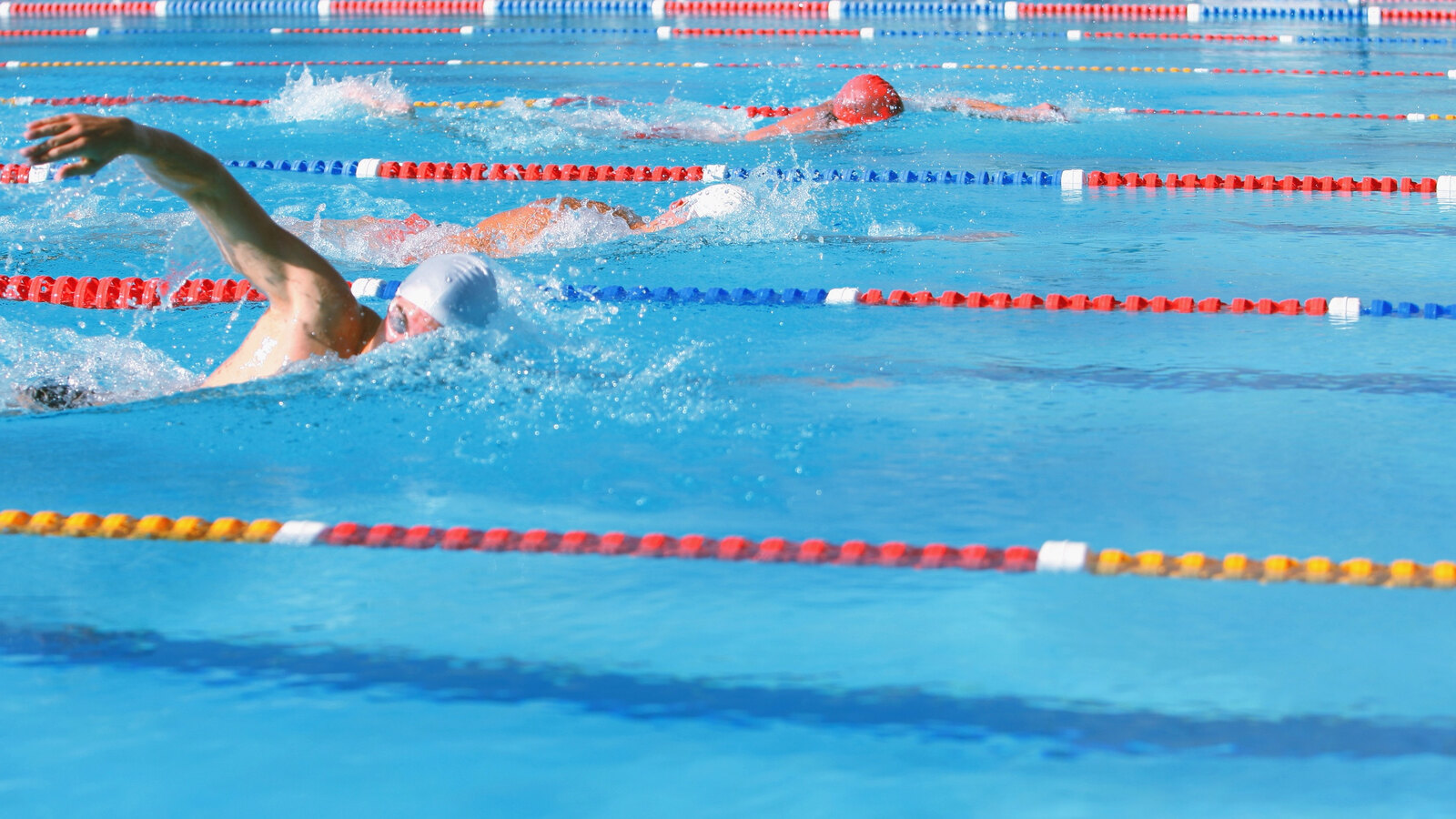
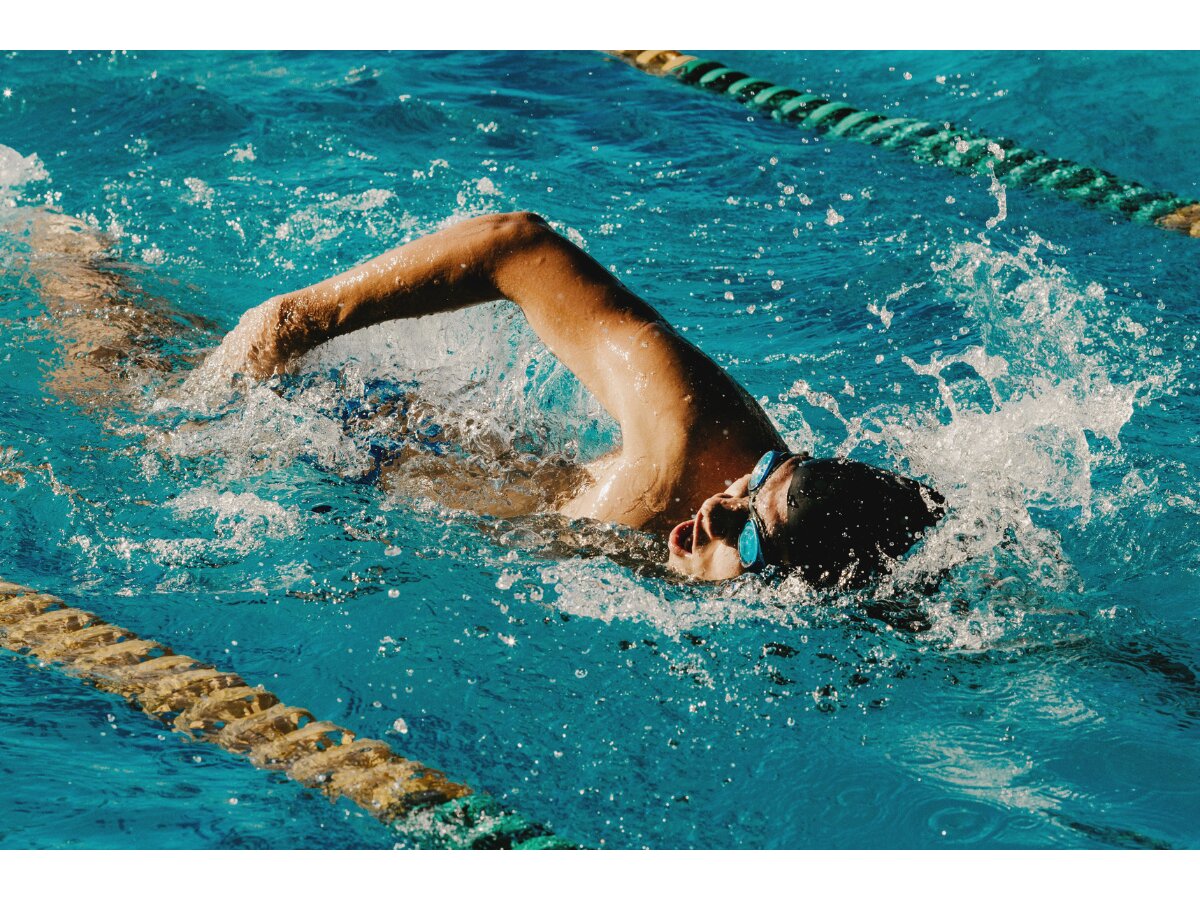
    Swimming is a physical activity, and it’s also an exercise in managing pace: a mix of technique, endurance and strategy in the water. Many swimmers ask themselves one question: what pace is actually good for me? There’s no single answer, because it depends on training level, distance, stroke and conditions in the water. Understanding and setting your own pace is central to effective training, better results and enjoying every metre in the water. The sections below look at swim pace from a few different angles.

    Pool Swim Pace

    Why Pool Pace Matters

    Pool pace is the basic measure of a swimmer’s progress. Tracking the time needed to cover a set distance lets you gauge your current level and plan your next training targets. Stroke efficiency and technique have a direct effect on speed, so refining technique matters as much as building fitness. A few tools help track pace:

    • Stopwatches and timers: the classic method, good for anyone who wants to focus purely on timing without distracting extras.
    • Sports watches with swim tracking: modern devices that measure distance, pace and stroke count, and analyse efficiency from motion sensor data.

    Regular measurement makes it possible to track progress and adjust the training plan based on results.

    Typical Pace by Swimmer Level

    Pool pace varies significantly by training level:

    • Beginners: around 2:00 per 100 m on average. At this stage, the priority is building efficient technique and a base level of endurance.
    • Intermediate swimmers: pace sits around 1:30 min/100 m, alongside more training aimed at technique and conditioning.
    • Elite swimmers: times below 1:00 min/100 m reflect a very high level of technique and endurance.

    Research published in the Journal of Sports Sciences, among other journals, backs this up: regularly tracking pace supports effective development of swimming skill.

    Open Water Swim Pace: Conditions and Challenges

    What Determines Pace in Open Water

    Swimming in open water, lakes, rivers or the sea, is significantly harder than swimming in a pool. Currents, waves, water temperature and visibility can slow pace by as much as 5 to 20 seconds per 100 m compared with the pool. Tougher conditions raise fatigue and demand more, both physically and mentally.

    At IRONMAN races, for example, the swim takes place in open water, where even experienced triathletes have to expect a slower pace than they would hit in the pool.

    Elite Pace: The World’s Best

    The best 10 km open water swimmers hold a pace of around 1:12 per 100 m, the product of years of training, technique and race strategy. Their pace over sprint open water distances is faster still.

    How Stroke Affects Pace

    The Fastest Strokes: Freestyle and Backstroke

    • Freestyle is the fastest and most efficient stroke. It delivers the highest speeds and is the default for amateurs and professionals alike.
    • Backstroke is slower, but more comfortable and puts less strain on certain muscle groups, which helps during longer sessions and rehab work.

    Butterfly and Breaststroke: Demands and Traits

    • Butterfly demands strength and endurance, is technically difficult and hard to hold over long distances. Good technique matters here in particular, to avoid injury.
    • Breaststroke is the slowest stroke, but popular with amateurs for its comfort and relatively low demand on the respiratory system.

    For performance, and for triathlon specifically, freestyle is the stroke most commonly recommended.

    Swim Pace in Triathlon

    Pace Among Professionals

    Top triathletes swim around 1:15 min/100 m for men and 1:20 min/100 m for women. Those times come from strong technique, well-planned training and the ability to adapt to changing conditions.

    Gear and Conditions

    A wetsuit in open water races improves buoyancy and reduces drag, which can shave a few seconds off pace per 100 m. Calm, warm conditions favour faster times, while rough weather demands more flexibility and adaptability from the athlete.

    What Counts as a Good 1K Pace?

    Elite Numbers

    Elite swimmers cover 1 km in under 10 minutes, reflecting a very high level of fitness, technique and endurance.

    Amateur Benchmarks

    For recreational swimmers, or those preparing for a first race, hitting around 20 minutes is already a solid target to train toward. A time under 15 minutes points to strong fitness.

    Tracking and Planning Progress

    Regular time trials over 1 km, under controlled conditions, help assess training effectiveness and set realistic goals. Using data such as 100 m pace makes it possible to predict and plan results over longer distances.

    Planning Swim Training Around Pace

    Structure and Periodisation

    Consistency is the foundation. A training plan should include technical sessions (stroke work), endurance sessions (longer sets in the aerobic zone), intervals (high intensity, for example 4×100 m with 30 seconds’ rest) and recovery.

    A Sample Microcycle for an Intermediate Swimmer

    • Monday: 1500 m warm-up, 6×100 m at threshold pace (around 1:30 min/100 m), 200 m cool-down
    • Wednesday: 800 m technique work, 4×50 m sprint, 600 m easy swimming
    • Friday: intervals, 10×100 m at RPE (Rate of Perceived Exertion, a subjective sense of intensity) 7 to 8 out of 10, with 20 seconds’ rest
    • Sunday: 2000 m continuous, steady swimming at zone 2 pace (moderate endurance, around 65 to 75% of maximum heart rate)

    Reading the Data

    • Heart rate zones: help pin down effort level. Zone 2 is a comfortable pace where the body burns mostly fat.
    • FTP (Functional Threshold Pace): the threshold pace a swimmer can hold for roughly 30 to 60 minutes, central to anaerobic threshold work.
    • TSS (Training Stress Score): a measure of overall training load that accounts for both intensity and session length.

    Tracking these numbers regularly helps prevent overtraining and helps keep motivation up.

    Recovery, Nutrition and Mental Preparation

    Proper recovery, good sleep and balanced nutrition are essential to improving both pace and endurance. Sleep restores the nervous system and lets muscles rebuild. Carbohydrates are the primary fuel, and protein supports muscle repair. On the mental side, visualisation and mindfulness help manage race-day nerves and keep focus in the water.

    Swim Pace Is Something You Shape

    Swim pace isn’t fixed. It shifts with deliberate training, better technique and mental preparation. Whether you’re new to swimming or working to improve a triathlon split, the fundamentals are patience, consistency and setting realistic new goals. Start by measuring your current pace, then build a training plan on that baseline: each metre gets easier to cover from there.

  • How to Start Triathlon Training: A Beginner’s Guide

    How to Start Triathlon Training: A Beginner’s Guide

    A triathlon combines swimming, cycling and running into one race. It tests your strength, endurance and determination. Don’t let that put you off: triathlon is open to anyone, regardless of starting fitness level, with the right training. This guide covers the basics of the sport, gear choices and training strategy to help you get started.

    What Is a Triathlon?

    A triathlon is a multi-discipline race that combines swimming, cycling and running. Distances range from sprint races to standard-distance events up to the full Ironman distance. Sprint distance is one of the shorter options: 750 metres of swimming, 20 km of cycling and a 5 km run. At the other end of the spectrum is the long-course distance: 3.86 km of swimming, 180.25 km of cycling and a marathon run of 42.195 km. There are plenty of distances in between. Beginners are generally advised to start with a shorter distance and build up gradually.

    Gear You Need to Get Started

    The basic gear you need for triathlon training is a swimsuit, a bike and running shoes.

    Swimming is the first discipline in a triathlon, so a proper swimsuit matters. Choose one that’s comfortable and allows a full range of movement. Some races, particularly open water ones, may also require a wetsuit.

    The bike is the second piece of equipment. You can start with whatever bike you already own. If you plan to race, though, a dedicated triathlon bike, lighter and more aerodynamic, is worth the investment.

    Running shoes should be comfortable and properly fitted. Since you’ll be running after an intense swim and bike leg, good shoes make a real difference to comfort and performance.

    Beyond the essentials above, a bike helmet, sunglasses and a water bottle are worth having on race day. A sports watch is also useful for tracking progress and monitoring heart rate.

    Triathlon Training Basics

    The foundation of triathlon training is balancing work across swimming, cycling and running. Safety matters, and regular sessions let you build endurance and strength gradually. As Joe Friel writes in The Triathlete’s Training Bible, the key to triathlon success is deliberate training planning and a focus on technique in each discipline. He recommends increasing training intensity and volume gradually, to avoid injury and early burnout.

    Your training routine should include sessions in each of the three disciplines, plus strength work and stretching. Build in time for rest and recovery, and pay attention to nutrition. Triathlon calls for a holistic approach to training and health.

    Why a Training Plan Matters

    A structured training plan is central to triathlon success. It helps balance training across the three disciplines, ensures adequate recovery and makes it possible to track progress. Various training plans are available online, covering how to split sessions between swimming, cycling and running, and when and how long to rest. Fitting the plan to your own ability and goals matters more than following any plan to the letter.

    Nutrition and Hydration

    Diet and hydration matter as much as training itself. They fuel your sessions and support muscle recovery afterward. Triathletes need a balanced diet: protein for muscle repair, carbohydrates for energy, and fat for longer-lasting fuel. Hydration matters just as much, especially during long training sessions or races. Learning to fuel and hydrate properly is central to performing at your best.

    Recovery and Rest

    Rest and recovery are central to performing well in triathlon. Learning when and how to rest helps you avoid overtraining and injury. Recovery methods range from simple rest and sleep to physical therapies such as massage or ice treatment. Rest is often overlooked, but it matters as much as training itself.

    Motivation and Goals

    Staying motivated matters for long-term success in triathlon. Setting realistic goals and tracking progress helps with that. Whether the goal is finishing a first sprint-distance race or qualifying for an Ironman, every small step moves you closer to it.

    Triathlon demands determination, endurance and strength, but with the right training plan, anyone can take it on. Keep in mind the value of the right gear, balanced training, proper nutrition, recovery, and setting realistic goals.

  • Three-Rider Breakaway Wins the Americas Cup in Lima

    Three-Rider Breakaway Wins the Americas Cup in Lima

    Over the weekend of 21 to 22 August, Abtao beach in Callao, near Lima, hosted the Americas Triathlon Cup Callao Lima 2026. American athletes took two golds and a silver home from Peru. The most interesting part of this race is not the list of names, though, but what happened over the bike’s 20 km and why a three-rider breakaway held its lead to T2 anyway.

    Stuhlmacher: In Control From the First Metre

    Carter Stuhlmacher (USA) won the men’s race in a style every age-grouper should study frame by frame. He posted the fastest 750 m swim, in 9:41, and rolled into T1 with a 4-second cushion. Behind him came Joshua Bird (Canada) and Gabriel Terán Carvajal (Ecuador). No one else finished within 10 seconds of Terán.

    That trio rode alone. Behind them a large chase group formed and started closing, because in draft-legal triathlon, extra numbers mean free watts. The lead shrank across the full 20 km. It never disappeared, though. The breakaway riders reached T2 with a 30-second gap.

    Wilfong: The Fastest Run, Not Enough Distance

    Foster Wilfong (USA) came out of the water 58 seconds behind his fellow American. A disaster? Not necessarily, since it dropped him into the chase group, the only place from which the race was still winnable.

    On the run, Wilfong posted the fastest 5 km of the day, 14:20. It was the best run split in the whole field, and it still wasn’t enough. Stuhlmacher shed Bird and Terán, controlled the gap and brought home gold. Wilfong took silver, and Juan Jose Andrade Figueroa (Ecuador), just 8 seconds behind him, ran in for bronze.

    The lesson for an age-grouper is brutally simple: the best run of the day doesn’t make up a minute’s deficit from a 750 m swim if there’s no one left to catch on the way out. Swimming doesn’t win a sprint triathlon, but it decides which group you race in.

    Duncan Wins on the Bike, Not the Run

    In the women’s race, Faith Duncan (USA) confirmed her July win at Magog and beat a far more experienced Elizabeth Bravo (Ecuador). Gabby Martin (USA) and Leslie Amat Alvarez (Cuba) led out of the water, with Bravo close behind them.

    Duncan settled it on the bike. The best bike split of the day, 30:48, got her to the front and first into T2. She then added the fastest run, 15:53 over 5 km. Fastest in two of the three disciplines closes the case at a Continental Cup. Bravo took second and her first podium of the 2026 season after returning from injury, while Cecilia Sayuri Ramirez Alavez (Mexico) finished third.

    Juniors: McIntyre of Barbados Delivers

    In the junior race, Luke McIntyre (Barbados) posted the best swim and bike splits, and a 14:27 run, the second-fastest of the day including the seniors, gave him his first Junior Cup win, 14 seconds clear. Silver went to Maximiliano Bobadilla (Chile). Bronze went to Elias Medina Paolucci (Uruguay), who beat Sergio Maza Krause.

    Among the junior women, Manuela Ortega Arteaga (Ecuador) won by 32 seconds, settling it with a 16:37 run. Victoria Arce Nuñez (Costa Rica) was second, Renata Valentina Oña Paredes (Ecuador) third.

    The same weekend was meant to bring the Europe Junior Cup in Molėtai, Lithuania, but the super-sprint finals there were cancelled for weather.

  • Beaugrand and Hauser Sweep WTCS London’s Return

    Beaugrand and Hauser Sweep WTCS London’s Return

    After an eleven-year gap, the WTCS returned to London, and wasted no time reminding everyone why sprint racing can be triathlon’s most nerve-shredding format. On Saturday 25 July, Cassandre Beaugrand won for the third time in three starts this season. In the men’s race, Matt Hauser again proved stronger than Vasco Vilaça in the closing metres.

    Women: Beaugrand Settles It on the Run

    The last WTCS-ranked race in London was back in 2015. This time the course ran through the Royal Docks, with nearly half the run staged inside the ExCeL centre.

    Beaugrand came out of the water well off the front, a surprise for an Olympic champion. On the bike, American Taylor Knibb pushed hardest, and together with Britain’s Tilly Anema she opened a gap of roughly half a minute on the field.

    The breakaway ended at a single corner. Anema cut it too tight, hit a bollard and crashed. The chase group reeled Knibb back in bit by bit.

    The whole field hit the run together, and that’s when Beaugrand took over, dropping world champion Lisa Tertsch and rising star Tilda Månsson. The three women ran shoulder to shoulder almost to the line.

    Pos.AthleteCountryTime
    1Cassandre BeaugrandFRA56:06
    2Lisa TertschGER56:11 (+0:05)
    3Tilda MånssonSWE56:21 (+0:15)
    4Beth PotterGBR56:26 (+0:20)

    The top British finisher, Beth Potter, came in fourth. She still leads the overall series standings, even though Beaugrand has a perfect record of wins.

    The reason sits in the rulebook. The Frenchwoman has started only three of the six rounds held so far, and the standings count the best four results plus the Grand Final. Beaugrand hasn’t said whether she’ll chase the title for the rest of the season.

    Men: Three Seconds Between Hauser and Vilaça

    In the men’s race, Hauser confirmed his form, winning in 50:28, just 3 seconds ahead of Portugal’s Vasco Vilaça. Hungary’s Csongor Lehmann completed the podium, also within eight seconds of the win.

    It’s the Australian’s third win in three finished starts this season too, exactly the same record as Beaugrand’s.

    Pos.AthleteCountryTime
    1Matt HauserAUS50:28
    2Vasco VilaçaPOR50:31 (+0:03)
    3Csongor LehmannHUN50:36 (+0:08)
    4Morgan PearsonUSA50:45 (+0:17)

    Olympic champion Alex Yee struggled with the swim again. Off the bike, he was the most conspicuous absentee from the front group.

    On the run he clawed back what he could, cheered on loudly by his home crowd, but it was already too late for a high finish.

    What It Means for You

    A lead from the swim and bike guarantees nothing if you can’t hold the pace on the run. Beaugrand won despite a poor exit from the water.

    Crashes on short, technical bike loops are a real risk once the field gets dense. The day’s breakaway was decided by one badly cut corner, not a lack of power in anyone’s legs.

    In a race run over multiple laps, that one corner costs more than the watts you’re missing.

  • Philipp and Geens Headline the Pro Series Finale

    Philipp and Geens Headline the Pro Series Finale

    On Sunday 30 August, the IRONMAN Pro Series regular season closes. Zell am See-Kaprun is its 14th and final round. After that only two championship races remain, Nice and Kona. Up for grabs: 2500 points and a $50,000 prize purse.

    Philipp Wears Number One, Fifteen Days After a Course Record

    Laura Philipp will race with bib number 1. This is the same Philipp who demolished IRONMAN Kalmar on 15 August in 8:13:37. She took the course record that day from defending champion Katrine Christensen (8:27:49). Fifteen days between a full-distance race and a start in Austria isn’t textbook recovery. It’s the decision of someone with a specific score to settle.

    The German’s season hasn’t been easy. Health problems in spring cost her form. Even so, she collected third at 70.3 Pays d’Aix, a win at IRONMAN Sweden and second in Hamburg.

    There’s another twist. In Kalmar, Christensen finished second behind her, in 8:32:22, and that result put the Dane top of the Pro Series. Philipp, despite the course record, sits sixth. Zell am See is her chance to sharpen her half-distance form before the championship races. Triathlon Magazine Canada’s editors reckon she could climb as high as fourth after Sunday.

    Also on the start list is Lisa Perterer, runner-up at this race in 2025 and currently eleventh in the Pro Series.

    Geens Chases a Third Straight World Title

    The biggest name in the men’s field is Jelle Geens, a two-time 70.3 world champion. Injury wrecked his full-distance plans this year, so he’s put everything into one target: a third consecutive world title. No one has done that yet. Kona will have to wait until 2027.

    The Belgian’s numbers at this distance are obscene. Of 15 finished middle-distance races, counting T100 and 70.3 together, he’s stood on the podium in all but two. Two years ago, in one of his first starts at this distance, he finished second in Zell am See.

    One thing to note: Geens isn’t chasing the Pro Series this year, since he has no full-distance result to his name. In Austria he’s racing for form and rhythm, not points.

    Kraft vs Nygaard Priester, Rematch Number Seven

    Defending champion Fabian Kraft has had a mistake-free season, with podiums in all three races he’s finished: 70.3 Valencia, Challenge Walchsee and IRONMAN 70.3 Sweden.

    In Sweden, though, he lost to a fellow German. Lasse Nygaard Priester broke away from him on the run and won. A year earlier in Zell am See it went the other way, with Kraft running stronger. Both are on this start list, and their head-to-head record after six meetings favours Nygaard Priester.

    Trevor Foley arrives in Austria second in the Pro Series standings. He’s already banked a win at the 70.3 North American Championship in Happy Valley. Why another regular-season start? Probably as a backup result, in case Nice doesn’t go his way. He finished eighth in Kalmar, over twenty minutes behind the winner, so points from Austria could still come in useful.

    The financial motive isn’t a secret either. Foley has joked often enough on pro athlete panels about “$200G” that broadcasters now needle him about it. It refers to the bonus for the winner of the whole series, which in 2026 is exactly $200,000 for the top man and top woman. The top fifty split an additional $1.7 million.

    What It Means for You

    Coverage starts on Sunday 30 August at 10:30 CEST, on the IRONMAN YouTube channel. It’s one of the few windows in the calendar to see the complete 70.3 field racing together. Two weeks will remain until the world championship in Nice.

    Our pick for Sunday: Philipp wins the women’s race, but not as easily as her Kalmar result suggests. Fifteen days isn’t enough to be back at a hundred percent after a full-distance race. Among the men, we’re backing Geens. It’s his dress rehearsal before defending his title, and no one at this distance comes off the podium as rarely as him.

  • Räppo Erases a 2:20 Gap to Defend His Tallinn Title

    Räppo Erases a 2:20 Gap to Defend His Tallinn Title

    A year ago Henry Räppo won in Tallinn in a finish decided by seconds. On Sunday 23 August he defended his title far more comfortably, with a lead of over a minute. “Comfortably” is the wrong word, though, for a race in which he came out of T2 two and a half minutes down.

    Butters Dominated the First Two Legs

    German Hannes Butters swam fastest and came out of the water more than a minute ahead of the group holding Räppo, Marco Lorenzon, Enzo Bourdon and Casimir Moine.

    The Estonian is known for a strong bike leg, so he tried to prove it from the first kilometres. It didn’t work. Butters held pace well enough that he had over 2:20 in hand over Räppo by T2. Louis Woodgate came off the bike third, 2:45 down.

    At that point the race looked decided. At 70.3 distance, a two-and-a-half-minute lead out of the second transition is usually a verdict.

    The Run: A Minute Back in Four Kilometres

    Räppo didn’t calculate, though. In the first four kilometres he clawed back more than a minute. By the eighth he was already alongside Butters.

    They ran together only briefly. Räppo pulled away immediately and took the win in 3:38:31. Butters finished second in 3:39:38, 1:07 behind. Frenchman Enzo Bourdon came in third in 3:41:12.

    For the Estonian, it’s his second strong result of the season on northern European courses: in July he won Challenge Turku.

    Bernardi in Control, Kapten Three Seconds From the Podium

    In the women’s race, Italy’s Marta Bernardi won in 4:12:04. Behind her, France’s Sandra Huon finished in 4:13:05, a minute back.

    The real drama was for third place, though. Local athlete Liis Kapten closed out the podium in 4:13:08, losing to Huon by three seconds. The Estonian crowd got two storylines from one race: their winner, and their own athlete fighting to the line for second.

    Bernardi has raced evenly all year, and in Tallinn she never gave up the lead once she was off the bike.

    Results

    PlaceMenTimeWomenTime
    1Henry Räppo (EST)3:38:31Marta Bernardi (ITA)4:12:04
    2Hannes Butters (GER)3:39:38Sandra Huon (FRA)4:13:05
    3Enzo Bourdon (FRA)3:41:12Liis Kapten (EST)4:13:08

    What This Means for an Age-Grouper

    Tallinn is one of the closer 70.3 starts for anyone travelling from northern or central Europe. It sits on the Gulf of Finland, reachable by plane or ferry, so it’s worth a spot on the list for anyone looking for a half-distance race away from the crowded courses in Germany and Austria.

    There’s also a purely tactical lesson here, independent of ability level. Butters won the swim, won the bike, and still lost the race. Räppo rode in a way that let him get off the bike with legs that could run. That’s not exactly a discovery at 70.3 distance, but it’s rarely visible on this scale: 2:20 of deficit closed in under eight kilometres.

    Anyone who has ever blown up on the bike and then walked a half marathon home knows exactly what that means.

  • FISU Nyon 2026: Peszleg, Bettin Take World Titles

    FISU Nyon 2026: Peszleg, Bettin Take World Titles

    The World University Triathlon Championships took place in Nyon, on Lake Geneva, over the weekend of 8 and 9 August. Dominika Peszleg won the women’s race by one second, and Benedikt Bettin capped the best season of his career.

    Bettin runs away from the field on the run

    The race was over sprint distance: 750m swim, 21km bike and 5km run.

    Bettin won in 55:11, finishing 12 seconds ahead of German runner-up Jan Scheffold. Hungarian Gergő Dobi completed the podium.

    This was no one-day fluke for Bettin. Every one of his international gold medals came this season: the Africa Cup, the Asia Cup, and now Nyon. He also placed fourth at the sprint European Championships.

    His rise up the world ranking opens a path to a first WTCS start, a series he has not yet raced.

    Peszleg wins by a second, bronze two seconds off gold

    In the women’s race, Peszleg won in 1:01:57. Frenchwoman Elena Polaert led out of transition first, but the Hungarian caught her over the closing stretch.

    It came down to the fastest run in the field, 17:00 for 5km. Peszleg won by one second in the end.

    Another Frenchwoman, Appoline Foltz, took bronze a second behind Polaert. Gold to bronze came down to two seconds, on a distance that takes just over an hour.

    Peszleg is aiming higher than a university podium. In a stacked Hungarian squad she is fighting for an Olympic spot, and Nyon was just one stop in her season.

    Why this matters for amateurs

    FISU Nyon will not turn up in a prime-time broadcast slot. But the opening of the qualification window for Los Angeles 2028 means every international start, even a student one, now carries more weight than it did a year ago.

    Athletes such as Bettin and Peszleg are not there just to take part. They are racing for ranking points that will decide, two years from now, who goes to Los Angeles.

    Bettin is building a season without an international defeat and climbing the rankings without a single WTCS start, a rare trajectory. When Olympic spots start to be decided in 2027, some of these names will already be well known.

  • Flash News: fēnix 9, Frodeno’s UTMB Win, Wołos Worlds

    Flash News: fēnix 9, Frodeno’s UTMB Win, Wołos Worlds

    A week in which Garmin unveiled a new flagship, and Jan Frodeno reminded everyone that winning does not stop when a career in professional triathlon ends. In Japan, two Polish riders reached the podium at a world championship, a full-distance race took place near Bydgoszcz, Poland, and one red card in Kraków, Poland showed how strictly IRONMAN now enforces its newest rule. Here is the roundup for 22-28 August.

    1. Garmin unveils the fēnix 9 and 9 Pro

    Garmin’s launch was the loudest release of the week. During a livestream on 25 August, Garmin unveiled the fēnix 9 and fēnix 9 Pro. The base version costs $1,000, and the Pro and Pro Solar models cost $1,100. Orders open today, 28 August.

    Internal storage grew from 32 to 64GB, and the AMOLED display now reaches about 2,000 nits, roughly twice as bright as the fēnix 8. The watch comes in three sizes, 43, 47 and 51mm, with the solar versions available only in the two larger sizes. All models get a titanium case back.

    Among the software additions, Garmin showed off Epic, a feature that stitches multi-day expeditions into one story built from photos, health data and results.

    2. Frodeno wins his age group at UTMB

    On 27 August the three-time IRONMAN world champion started OCC, the 50K finale of the UTMB Mont-Blanc series. At 61.4 km (38 miles) through the mountains, it was the longest run of Jan Frodeno’s life. He finished in 6:31:55, winning the M45-49 category by almost 25 minutes and placing 58th in a field of about 2,000.

    The best number is a different one: his time was faster than the winning result in the younger M40-44 category (6:33:47). Frodeno turned 45 on 18 August, so he had moved into the new age group just nine days before the start.

    This was not a race open to just anyone. OCC is the UTMB World Series final, and the entire amateur field had to qualify first. Three years after retiring from professional triathlon, Frodeno won an age-group category in a race that requires qualification to enter.

    3. Wołos crowned world champion in Japan, Miernik takes bronze

    On Thursday 27 August, the UCI Gran Fondo World Championships got underway in Niseko on Hokkaido, held in Asia for the first time in the event’s history. The opening event was an individual time trial, 15 km with the start and finish in Kyowa.

    In the K35-39 category, Ewelina Wołos was fastest in 20:17.87, an average of about 44.3 km/h. Britain’s Hayley Simmonds clawed back time in the second half of the course but fell short by 5.98 seconds. Bronze went to a second Polish rider, Ewelina Miernik (20:33.14).

    The new world champion’s name will be familiar from triathlon. Wołos won the K35-39 category at the IRONMAN 70.3 World Championship in Marbella in 4:59:30. She turned professional in February 2026, became Polish duathlon champion in May, and placed 11th at Challenge Roth in a personal best of 9:14:19. She closed her triathlon season on 11 August and switched to cycling. Clearly, the switch worked. The time trial field included 402 riders from 52 countries.

    4. Red card for filming his own finish

    Footage from the finish line at Enea IRONMAN 70.3 Kraków circulated across Polish social media this week. It shows an athlete filming his own finish on a small camera, crossing the line, and receiving a red card from a race official moments later. Grzegorz Dubowski appealed the decision. The appeal was rejected and the disqualification stood.

    The reason is not in doubt. In February 2026, IRONMAN tightened its rulebook, adding the line: “The use of any device (telephone, video camera, camera, glasses with a recording function, etc.) to take photos or record video during the race is prohibited. The athlete will be disqualified.”

    In practice, that removes everything at once: course selfies, a GoPro on the helmet, a live stream, camera glasses. Previously, carrying a phone was allowed as long as it was not used in a distracting way; now pressing record alone wipes the result. Dubowski said the camera was waiting for him 200 metres before the finish and that he had no idea about the change. Check the rulebook before your next start, since after eight hours on course a single gesture can erase the entire day.

    5. Leipzig debuts on the 70.3 calendar

    On Sunday 23 August, the first edition of IRONMAN 70.3 Leipzig took place. Wilhelm Hirsch won the men’s race in 3:30:59, ahead of Rico Bogen (3:32:59) and Pierre Dupuy (3:34:14).

    In the women’s race, Caroline Pohle had no rivals and finished in 3:53:42. Bianca Bogen was second, more than eleven minutes back (4:05:06), and Brooke Gillies took third seven seconds behind her (4:05:13).

    6. Borówno: 79 finishers on the full distance

    On Sunday 23 August, the Ocean Lava Metalkas Triathlon Polska took place near Bydgoszcz, Poland. Marcin Rodziewicz was fastest over the full distance in 9:07:08. The full 3.8 km / 180 km / 42.2 km was completed by 79 athletes, including 5 women.

    The swim took place on Lake Borówno, four laps for the full distance and two for the half. The finish and T2 transition were at the Zawisza sports complex on Gdańska 163 in Bydgoszcz, so the final kilometres of the run passed through the city. Three distances were on offer: sprint, half and full.

    The event is a veteran on the Polish calendar, held since 1997. For a full-distance race without a Hawaii-sized entry fee, this is the address.

    7. Räppo wins again in Tallinn

    On the same day, 23 August, Henry Räppo won IRONMAN 70.3 Tallinn for the second time. The Estonian crossed the line in 3:38:31, with Hannes Butters (3:39:38) and Enzo Bourdon (3:41:12) following.

    Italy’s Marta Bernardi won the women’s race in 4:12:04. The rest of the podium was tighter, with three seconds separating Sandra Huon (4:13:05) from Liis Kapten (4:13:08).

    8. Lima goes to the Americans, Molėtai blown out by weather

    Team USA swept the Pan American Cup in Lima. Carter Stuhlmacher won the men’s race after posting the fastest swim of the field (9:41 over 750m) and exiting the water 4 seconds clear. Foster Wilfong took silver. He trailed his teammate by 58 seconds out of the water but closed the gap in the bike group and ran the fastest split of the day (14:20 over 5 km).

    In the women’s race, Faith Duncan added a second win of the season after July’s Magog. The American rode the fastest bike split of the day (30:48), was first into T2, and added the fastest run (15:53), leaving experienced Elizabeth Bravo behind.

    Europe fared worse. The Junior Cup finals in Molėtai, Lithuania were cancelled because of weather, a season that had already lost races to heat this time lost one to the opposite extreme.

    Frodeno’s age-group win at UTMB and Wołos in the rainbow jersey are the week’s two best stories. The one with the most practical consequences is the third: since this season, a camera on an IRONMAN course wipes the result.

    9. WTCS Weihai: Beaugrand chases the title

    Tomorrow, 29 August, the WTCS series returns to Weihai for the third time running. The women’s start list has 55 names, including the last three world champions. The field is effectively complete.

    The most interesting situation belongs to Cassandre Beaugrand. The Olympic champion is sixth in the series standings with three results from four possible starts, so she needs points. Lisa Tertsch and Beth Potter, meanwhile, are defending their lead over the Frenchwoman.

    In the men’s race, remember the name Solomon Okrafo-Smart. The Briton will make his WTCS debut straight off his first World Cup win in Edmonton.

    10. Philipp heads to Kona after three races in a row

    Laura Philipp demolished the field at Kalmar two weeks ago. This Sunday she lines up at 70.3 Zell am See, then heads to the world championship in Nice, then straight to Hawaii. Three starts in under a month and a half before the season’s toughest race is a deliberate change after last year’s Kona, where the German defended her number one and finished third.

    “I think I overdid the preparation, because I really wanted to be ready for the heat and set myself the goal of winning,” she said on The Women’s Race podcast. “There’s a thin line between wanting something and wanting it too much.”

    Last year she spent weeks in isolation on Maui, then walked into Kona race week with a full schedule of champion’s duties. This year she will fly to the island two weeks before the start, and that is it. “Nobody can guarantee it will work. Nobody can guarantee it either if you focus on nothing but Hawaii from now on and grind through every session.”

    11. What’s next: Zell am See-Kaprun

    On Sunday 30 August, the 70.3 calendar moves to Austria for IRONMAN 70.3 Zell am See-Kaprun. The Alpine course usually rewards strong cyclists, so times will be noticeably slower than in flat Leipzig.

  • Maja Stage Nielsen Retires From Triathlon

    Maja Stage Nielsen Retires From Triathlon

    Maja Stage Nielsen, the Danish athlete who has raced professionally for more than a decade, has announced her retirement from triathlon. The 38-year-old said on Instagram that she no longer has “race mode” in her, even though she still loves training. She no longer wants to line up just to be on the start list.

    Over a decade on the IRONMAN distance

    Nielsen built her career on the long distance, where the racing is hardest. Her record includes a win at Apfelland Triathlon in 2023 and a string of second-place finishes at some of the biggest IRONMAN races.

    • Mallorca, 2016
    • Lanzarote and Cozumel, 2019
    • Texas, 2023
    • Hamburg, 2024

    These are the course names that most amateurs treat as a lifetime goal. She raced them professionally, year after year.

    This is it. Time to admit that I’m done racing triathlon. I’ve known for a while. Many of you probably suspected it too. I just didn’t have the courage to say it out loud.

    Maja Stage Nielsen

    Thirteen starts without a podium, despite good form

    Her last podium finish was second place at IRONMAN 70.3 Westfriesland the previous season. After that came thirteen consecutive starts without a top-three result. She opened the 2026 season with a DNF at IRONMAN New Zealand, pulling out on the bike leg.

    Her fitness had not left her, though. In May, after that DNF, she ran the Copenhagen Marathon, finishing 17th among women in 2:44:04.

    Sport is as hard as it is rewarding. Being an athlete is the only thing I’ve known. It challenged me, shaped me and gave me more than I ever dreamed of. I learned to love swimming, I love riding my bike, I love running and I still love doing it every day, except on race day. I don’t have any “race mode” left in me, and I’m done being the athlete who shows up to the start line just to be there. I’ve done that too many times already. It was never the real me, and I don’t want it to keep being me.

    Maja Stage Nielsen

    What comes next, without a plan yet

    Nielsen admits she has no plan yet for the next stage, even though she made the decision long ago. The new chapter unsettles her more than any professional start did, despite more than a decade of lining up at the gun.

    I always loved the process more than the result. Training, the daily routine, small improvements, that’s what gave me joy.

    Maja Stage Nielsen

    I have no idea what comes next. I only know I still have dreams and goals to chase. I know sport will always be part of my life. I know I need to find a job, and I know it’s time to get moving. This isn’t goodbye to sport. This isn’t goodbye to you. It’s only goodbye to racing triathlon professionally.

    Maja Stage Nielsen