Blog

  • The Science-Backed Way to Taper for a Triathlon

    The Science-Backed Way to Taper for a Triathlon

    You have done the work. Hundreds of kilometres in your legs, long Sunday long runs, session after session. Now, two weeks out from race day, you have to do something that most amateurs find harder than the toughest interval: back off.

    Taper, the period of sharpening form before a race, is the moment where a whole season gets ruined most easily. There are usually two scenarios: out of boredom you add an extra session, or in a panic you spend two weeks on the sofa. Both mistakes cost exactly the same thing, your best possible shape on race day.

    The good news is that the science is quite specific about what to do, and it is not guesswork, it comes from meta-analyses of hundreds of competitive endurance athletes.

    What the science says: two weeks, and half the volume

    Bosquet and colleagues’ well-known meta-analysis reviewed taper research in endurance athletes and reached a surprisingly clear conclusion. The best results come from a taper of around 14 days, in which training volume drops by 41 to 60%, roughly half.

    The average improvement in race performance is around 2%. Over a 70.3, that can be whole minutes off a personal best. There is one condition that decides everything, though.

    Cut volume, not intensity

    This is the part most amateurs get wrong. Taper is not “an easy week where you do everything slowly”. It is closer to the opposite.

    In Bosquet’s analysis, the best results came from plans that kept intensity at its existing level. The volume cut is best achieved by shortening sessions, not cutting how many of them you do. Frequency stays roughly the same, you keep training about as often, each session is just shorter.

    In practice: you shorten sessions but keep short efforts at race pace or above inside them. Instead of a 90-minute run with intervals, you do 40 minutes with a few strides at race pace. The engine stays warm, and the legs get time to recover.

    How to spread the cut over time

    A progressive taper works best, volume comes down gradually rather than in one drastic drop. Here is a simple two-week template:

    PeriodVolume (vs peak)What you actually do
    Last hard week100%Normal, big block, last strong efforts.
    Week -2around 70%Shorter sessions, intensity unchanged.
    Week -1around 50%Even shorter sessions, short race-pace sharpeners.
    Last 2 to 3 daysminimalShort shakeout with a few pickups, maximum sleep.

    Key rule: even in the last few days, do not disappear entirely from the pool, the bike or the track. A short stimulus a day or two before the race, so-called openers, a few accelerations at race pace, keeps the nervous system ready. Two full days of lying flat will leave you feeling heavy on the start line.

    Three disciplines, three speeds of recovery

    In triathlon, tapering gets complicated because swimming, cycling and running load the body in very different ways.

    • Running generates the most muscle micro-damage and needs the longest recovery. Cut volume here most aggressively.
    • Swimming loads the musculoskeletal system the least, but needs constant feel for the water. Keep the frequency up, short and frequent swims beat one big session followed by a week away from the pool.
    • Cycling sits in the middle. It is easy to rack up kilometres on the bike without a big recovery cost, but you still cut session length consistently through the taper.

    Taper tantrums: what happens in your head

    Backing off training triggers a specific mental state in athletes, known among runners and triathletes as taper madness or taper tantrums.

    • Phantom pains (“taper pains”): suddenly your knee twinges, your Achilles aches, or your shoulder pulls. This is a real, documented phenomenon. Studies on marathon runners during taper found that 67% report new muscle and joint aches that never showed up during the heaviest training weeks.
    • Why it happens: researchers have shown that when training stress drops sharply, athletes become hyper-aware of normal muscular sensations that were previously masked by constant fatigue. On top of that, the immune system finally has resources to deal with minor inflammation, which produces brief twinges. If nothing happened in training, it is not an injury. It will pass by race day.
    • Mood swings and irritability: research points to anxiety levels rising by as much as 40% in endurance athletes when training volume drops by more than 30%. A sudden cut in training hours sharply reduces your daily dose of endorphins. You are essentially going through withdrawal. Redirect that energy into sleep and mental rehearsal of the race.

    Fuel for the start: the carbohydrate loading protocol

    Lower energy expenditure during taper, with your usual diet unchanged, already rebuilds glycogen naturally. Real, targeted loading is worth starting 36 to 48 hours before the gun.

    • Aim for 8 to 10 g of carbohydrate per kilogram of body weight a day (for an 80 kg athlete, that is 640 to 800 g of carbohydrate a day).
    • Carb loading is not an excuse to eat pizza or burgers. Avoid fats, which slow digestion. Choose easily digested sources: rice, pasta, baked potatoes, fruit juice, honey, white bread.
    • Two days before the race, cut fibre hard, vegetables, fruit, wholegrain products. You want to start with a full tank and light, empty intestines.
    • If you weigh 1 to 1.5 kg more than usual the day before the race, that is good news. Every gram of stored glycogen binds about 3 g of water in the muscles. That water will save you from dehydration out on the run.

    Race week, day by day

    1. Monday to Tuesday: your last chance to collect the bike from the shop or do a final drivetrain check. Sessions are very short and symbolic.
    2. Wednesday: start easing off high-fibre foods while keeping hydration steady, water plus an electrolyte drink.
    3. Thursday: ramp up carbohydrates. Do a short run or ride with openers, for example 3 to 4 efforts of 30 seconds at race pace, to keep the muscles primed.
    4. Friday: a rest day, or a very short (10 to 15 minute) swim in your wetsuit on the course, if the organiser allows it. Collect your race packet, check out T1 and T2.
    5. Saturday: a brief session (15 minutes on the bike, 5 minutes running, 2 to 3 short bursts to wake the nervous system). Rack the bike and drop your bags in transition. Eat an early, tried-and-tested dinner and be asleep before 22:00.

    Let technology do the counting

    Manually programming a taper, working out a progressive drop in minutes while keeping intensity in check, is stressful for a lot of amateurs. Modern systems handle that automatically.

    Dedicated training apps and platforms, such as triathlify.com, build the taper phase into their plans by default. Their algorithms calculate the point at which accumulated fatigue should start to drop, and form, the Training Stress Balance, should peak, right on race morning. The system automatically shortens sessions and schedules the right workouts, so you never have to work out whether you should be cutting 40% or 50% of your mileage, you just do the session the calendar gives you.

    Common amateur mistakes during taper

    1. Panic that you “haven’t done enough”. The last two weeks will not build your fitness, it is already in your legs. Forcing extra sessions in at the last minute will only tire you out. Fitness cannot be crammed in a week.
    2. Treating taper like a coma. Cutting all stimulus completely is the surest way to feel sluggish on the start line. Less means shorter, not slower.
    3. Overhauling diet or gear. Taper is a terrible time to test new gels, wetsuits, shoes, or “cleanse” diets. Nothing new in the two weeks before a race, that is a hard rule.
    4. Skimping on sleep. The body supercompensates and rebuilds during rest, not during training. Sleep during taper is as important a training unit as any other.

    The plan in three sentences

    Start reducing load two weeks before the race. Cut volume by around half, but keep intensity and session frequency, letting a training platform’s algorithm handle the precise dosing. Spend the last few days on short shakeouts with sharp efforts, maximum sleep, carb loading, and zero experiments.

  • Week in triathlon: records and Garmin buys TrainingPeaks

    Week in triathlon: records and Garmin buys TrainingPeaks

    Triathlon did not let anyone rest last week. Records over full distance, European medals for Poland, heat that shortened the course in Banyoles, WTCS returning to London after 11 years, and a piece of industry news with weight: Garmin has bought TrainingPeaks and TrainHeroic. Plus domestic racing in Rawa Mazowiecka and Starachowice.

    1. Van Riel and Findlay took Lake Placid apart

    IRONMAN Lake Placid was meant to be hard, classic and unrewarding. It was. Marten Van Riel and Paula Findlay apparently did not get the memo.

    The Belgian won in 7:41:57, taking more than eight minutes off the course record and adding the fastest marathon in the event’s history. It is his first full-distance IRONMAN win, and a firm signal ahead of the season’s main targets.

    Findlay had the debut you dream about: a first race over full distance, victory in 8:47:43, and a new bike course record of 4:50:26. It was not an outright women’s course record, but for a debut on a hard Lake Placid it belongs in the watch-it-twice category.

    2. Banyoles cooked the field. Run cut to 14 km

    The Multisport European Championships in Banyoles, in Catalonia, ended in conditions that had more to do with fighting the weather than racing middle distance.

    Organisers cut the run from 21 km to 14 km on grounds of heat and athlete safety. The final course was 1.9 km swimming, 83 km of non-drafting cycling and 14 km running.

    The elite races went to Mikel Arrasate Larrea and Marta Bernardi. The shortening was announced before the start, so there is nothing to speculate about here: athlete health beat the distance table.

    3. Garmin buys TrainingPeaks and TrainHeroic

    This is the week’s biggest technology story in endurance sport.

    On 22 July 2026 Garmin officially announced the acquisition of TrainingPeaks and TrainHeroic from Peaksware Holdings. Financial terms were not disclosed, but around 120 employees in Louisville, Colorado, move across to Garmin.

    What does it mean for a triathlete? Today, nothing to click in settings. Strategically it is a heavy move. Garmin takes in the platform coaches and endurance athletes actually use, plus a tool with deep roots in strength training.

    The question is no longer whether Garmin will build out coaching. It is how deeply it will fold training, data analysis and plans into its own ecosystem.

    4. WTCS returned to London after 11 years

    London got a top-tier race again. The World Triathlon Championship Series came back to the British capital after 11 years, as part of the London T100 weekend.

    It was raced over sprint distance: 750 m swim, 20 km bike, 5 km run.

    In the men’s race Matthew Hauser beat Vasco Vilaça to win in 50:28, with Csongor Lehmann completing the podium. In the women’s, Cassandre Beaugrand showed her running class and won in 56:06, ahead of Lisa Tertsch and Tilda Månsson.

    Alex Yee was only 14th, though with racing like that there was plenty to watch anyway.

    5. Hayden Wilde out of London

    The field lost one of its hottest names before London even started.

    Hayden Wilde withdrew from WTCS London after an MRI showed inflammation around his lungs. The New Zealander said it might explain his uneven form in training.

    A loss for the spectacle, a good decision by the athlete. With a season and targets like his, there is no sense pretending lungs are a detail.

    6. Laidlow’s Canyon Speedmax goes on sale

    Sam Laidlow won Challenge Roth in 7:21:04 on the new Canyon Speedmax CFR, beating the best mark over iron distance. A few days later Canyon officially put the new Speedmax on sale.

    The new frame is built around the AeroID system, meant to bring some of the pro-level aerodynamic fitting to bikes customers can actually buy.

    With the usual footnote: the wallet may give out sooner than the legs do on the second climb.

    7. RaceRanger shows data can change racing

    Challenge Roth published its RaceRanger data, and the numbers are concrete.

    Average time spent illegally inside the drafting zone fell from 2:40 in 2025 to 1:15 in 2026. That is a drop of 53%, even though the zone for pro athletes was widened from 12 to 20 metres.

    This may be one of the more important directions for long distance: fewer arguments after the race, more hard data. Officials are still needed, but telemetry is starting to do what an eye from a motorbike cannot always catch.

    The week in summary

    This week had everything: records, heat, an acquisition and London’s return to WTCS. The best part is that the season shows no sign of easing off.

  • Garmin CIRQA: No Screen, No Subscription, $199

    Garmin CIRQA: No Screen, No Subscription, $199

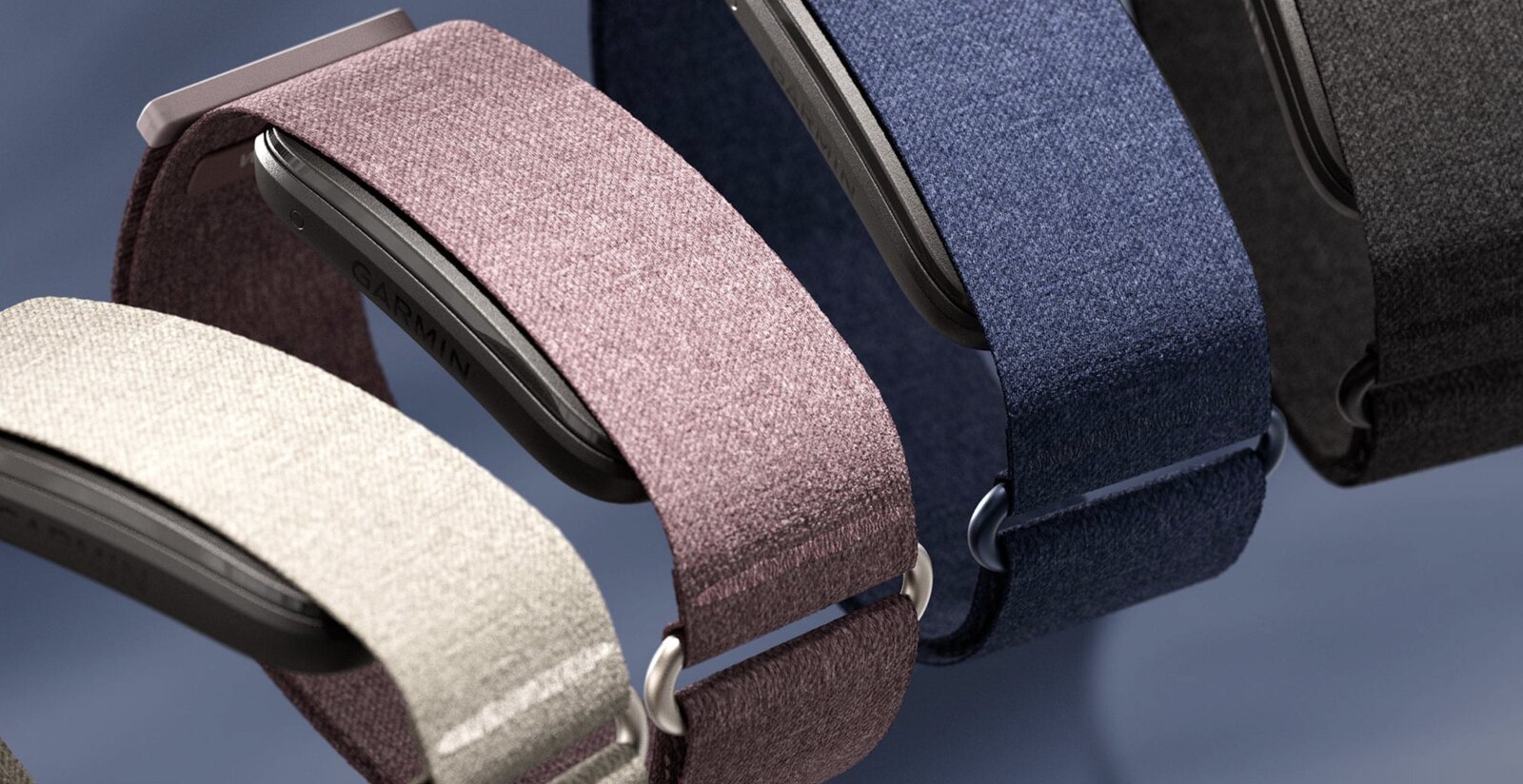
    Garmin has trained us to expect watches that do everything and cost about as much as a used bike. Now it is going the other way. On 21 July the company unveiled CIRQA, its first screenless band, priced at $199.99 (€199.99 in Europe). Sales start on 24 July. This is not a sports watch for swimming and running, it is a device built for a different job entirely. Which is exactly why it is worth understanding what a screenless band is for in the first place.

    What it actually is

    CIRQA is a lightweight band that monitors health and recovery around the clock. There is no display, you read the data in the Garmin Connect app on your phone. The fibre-reinforced polymer casing weighs about 20 g with the strap. You wear it on the wrist or as an armband, and the fabric straps come in several colours (Black, Captain Blue, French Grey, Mauve, Dark Olive, among others) and two sizes (S/M and L/XL). The battery lasts up to 10 days, so you charge it roughly once a training block rather than every other day.

    No subscription, but a Connect+ option

    You buy the hardware once and get every core feature with no subscription. In a world where Whoop charges around $30 a month for access to your own data, that is a real argument. Garmin also offers an optional Connect+ plan at $6.99 a month with expanded analysis, but the basic metrics, Training Readiness, HRV Status, VO2max, sleep, are free.

    What it measures

    Despite having no screen, CIRQA collects exactly the data a triathlete watching their recovery cares about. It tracks heart rate, blood oxygen (Pulse Ox), skin temperature, stress and movement around the clock, and calculates the same metrics known from Garmin’s pricier watches:

    Recovery: Training Readiness, HRV status, time to full recovery.
    Fitness: VO2max, training status, Acute Load, Load Ratio, Load Focus.
    Sleep: sleep stages, sleep score, HRV, breathing, nap detection.
    Activity: automatic detection of runs and walks, manual assignment from more than 80 activity types in the Connect app.

    In other words, you get the backbone of Garmin’s recovery system in a cheap, comfortable package you can wear at night and at work.

    How it works alongside your multisport watch

    This is the part that matters most for a triathlete. Data from CIRQA flows into Garmin Connect and merges with the data from your sports watch. DC Rainmaker confirmed this in testing: wearing CIRQA on one wrist and a Forerunner 170 on the other, a Fenix 8 Pro automatically updated its stats with data from the band, including steps and training load.

    What does that mean in practice? If you wear, say, a Forerunner 965 for training and CIRQA for the rest of the day, in the office, at night, in the shower, Connect gets a full 24/7 picture. Your 965 realistically lasts about 14 to 18 days on a charge (23 days claimed in smartwatch mode). CIRQA adds another 10 days of continuous monitoring without charging the watch. Together, they close the gaps in recovery and sleep data that appear whenever the watch is off your wrist or on the charger.

    Who it makes sense for, and who it does not

    Let’s be clear about what CIRQA does not do. It has no screen, so it will not show you pace, power or heart rate on the course. This is not a device for racing, you still need a multisport watch or a bike computer for training and competing in your disciplines. CIRQA will not replace a Forerunner or a Fenix.

    It makes sense as a second device dedicated to recovery. Your sports watch handles training and racing, while the rest of the day, at night, in the office, in the shower, a light band that you barely need to charge tracks recovery and sleep. For a triathlete who takes Training Readiness and HRV seriously but does not want to sleep with a heavy watch on their wrist, it is a neat solution.

    If you are after your first and only device, one that also needs to track your sessions, this is not it. In that case, spend more on a watch with a screen and sport profiles.

    Verdict

    CIRQA is a smart move: Garmin takes its proven recovery system, drops the screen, drops the subscription, and brings the price down $199 (€199.99). For anyone already tracking form through Training Readiness and HRV who wants a comfortable round-the-clock sensor, it is one of the more interesting launches of the summer. For anyone who wants a single device for everything, it is too big a compromise.

  • How to Set Up Bike Cleats and Save Your Knees

    How to Set Up Bike Cleats and Save Your Knees

    You spend thousands on a bike, aero wheels and an integrated bottle between the aero bars, and the one part that connects you directly to the drivetrain gets bought as an afterthought. Cleats are the single point through which all the power you generate reaches the crank. Badly chosen or badly set up, they can wreck your knees on a 90 km loop through Kashubia. Set up well, they simply disappear. You do not feel them, you just ride.

    Here is how the main systems differ, how to diagnose foot and knee pain, what it costs to buy into a given standard, and how to set your cleats so your foot sits in the shoe like it grew there.

    Road systems versus MTB: why three bolts make a difference

    Many beginner triathletes start out in mountain bike shoes and pedals (the MTB system, such as the popular two-bolt Shimano SPD). They make walking around transition easier, but on a long road ride they have serious drawbacks.

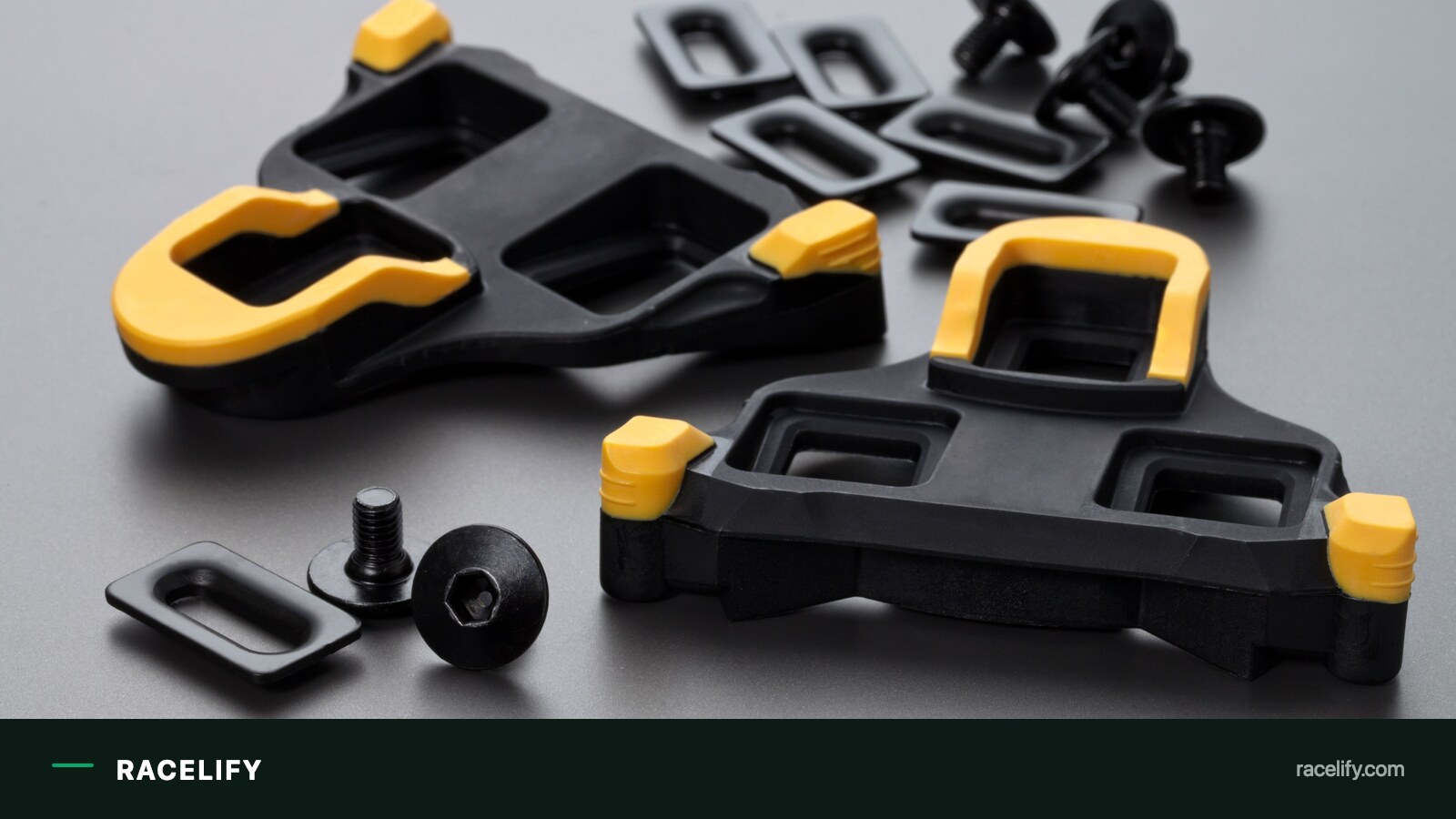
    Road systems (Look, Shimano SPD-SL) use a three-bolt mount and a much larger composite cleat. That larger contact area guarantees better power transfer and eliminates hot spots, the points of heavy pressure under the sole that, in MTB shoes, cause uncomfortable burning after a few dozen kilometres.

    The one word to learn before you buy: float

    Before you pick a brand or a colour, you need to understand float, the working play in the cleat inside the pedal. It is the freedom your heel has to rotate sideways while clipped in, before the foot releases.

    • Zero float: the foot is locked rigidly in one fixed position.
    • High float: the heel can move freely from side to side through the pedal stroke.

    This is not a detail for gear geeks. The human knee does not move in a perfectly straight line while pedalling, it has its own natural, individual path. If a cleat locks the foot against that biomechanics, all the extra load lands on the knee joint. That is why, for most amateurs, especially over long distances, moderate float is far safer than a rigid zero.

    Three systems, three philosophies

    Look Keo, the universal standard

    A system built around a triangular plastic cleat that dominates road cycling and triathlon. Look marks float by cleat colour:

    • Black: 0° float (fully rigid).
    • Grey: 4.5° float (the usual compromise).
    • Red: 9° float (a lot of freedom).

    For most amateur triathletes, grey or red cleats are the natural choice. They give the knee plenty of room without the foot feeling like it is flapping sideways.

    Shimano SPD-SL, the most common on the road

    Mechanically close to Look Keo, but not compatible with it: a Look cleat will not clip into a Shimano pedal and vice versa. Its colour code runs:

    • Red: 0° float (rigid, for sprinters and professionals).
    • Blue: 2° float (a very tight, precise range).
    • Yellow: 6° float (3° each way).

    Most riders use yellow cleats. It is the safest, most forgiving starting point, one that tolerates small errors in setup.

    Speedplay, the precision option

    Distinctive, double-sided round pedals, often nicknamed lollipops. Their standout feature is smoothly adjustable float, from 0° all the way to 15°. That range is set mechanically with small screws in the cleat itself, independently for each foot.

    For riders dealing with patellar tracking issues, old injuries, or an anatomical leg length difference, Speedplay is often the only route to pain-free riding. The downsides are a high entry price and the need for regular cleaning and lubrication of the mechanism hidden inside the cleat.

    SystemFloat rangeCharacter
    Look Keo0° / 4.5° / 9°Universal standard for road and triathlon.
    Shimano SPD-SL0° / 2° / 6°Safest starting point for most riders (yellow cleats).
    Speedplay0° to 15°, continuously adjustableFor knee issues and leg asymmetries.

    How to set up cleats so your knees survive the season

    Buying the right kind of cleat is half the job. The other half is bolting it to the sole correctly. Three planes need precise control:

    • Fore-aft position: the classic rule places the pedal axle directly under the ball of the big toe (the first metatarsophalangeal joint). In triathlon and time trials, though, many bike fitters deliberately move the cleat back a few millimetres. That shift takes real load off the calf muscles and Achilles tendon over a long bike leg, saving your legs for the run. Remember that moving the cleat back also changes your effective saddle height, so do not experiment with it right before a race.
    • Angle (rotation): the cleat needs to sit so the clipped-in foot lands in its natural anatomical position. For most people that means a slight inward or outward tilt of the heel. Do not guess. Sit on a trainer, pedal, and watch how the leg wants to sit naturally. Float will forgive a small offset, but it will not correct a foot that is forced into a drastically wrong position.
    • Side-to-side position (foot Q-factor): how far apart your feet sit has a big effect on the knee’s path. A shoe set too close to or too far from the crank arm pulls the knee inward or lets it drift outward under load, generating heavy strain in the joint.

    Golden rule: no revolutions right before a race. New cleats, a drastic position change and a long distance at full effort are the simplest recipe for a sudden injury you cannot undo mid-course. Test any correction for weeks, in low-intensity sessions.

    A cheat sheet for the sore: diagnose your pain

    If you feel discomfort after clipping in, your body is sending a clear signal that one of the planes is set wrong. Here are the most common patterns worth checking:

    • Numb toes or a burning foot: the cleat sits too far forward, toward the toes, pressing on blood vessels and nerves. Try moving it back toward the heel by 2 to 3 mm.
    • Pain at the front of the knee (under the kneecap): this can mean the cleat is set too far back, forcing the knee to work through too deep a bend. Too low a saddle causes the same symptom.
    • Pain behind the knee: a sign the cleat sits too far forward, so the leg over-straightens in the bottom of the pedal stroke and strains the tendons.
    • Pain on the outside of the knee (IT band): often comes from incorrect cleat rotation, forcing the heel too far inward or outward from its natural path.

    What it costs to buy into each system

    Running costs vary a lot by brand. The figures below are US list prices, for replacement cleats alone and for full starter sets.

    Cleats alone (replaced once a season or more often)

    • Look Keo (black, grey, red): about $23 for a genuine set. Grip versions with non-slip pads cost a few dollars more.
    • Shimano SPD-SL (red, blue, yellow): about $34 a set. Avoid suspiciously cheap copies online, they crack and can release unexpectedly during hard efforts.
    • Speedplay (Standard or Easy Tension cleats): about $60 a set. The price reflects the fact that the whole release mechanism sits in the cleat, not the pedal.

    A full starter set (pedals plus cleats, boxed)

    • Look Keo: from $95 for the entry-level Keo Classic, through $155 for the popular mid-range Keo 2 Max Carbon, up to $195 for the flagship race model, the Keo Blade Carbon.
    • Shimano SPD-SL: $80 for the entry-level PD-RS500, $89.95 for the tough and most popular amateur standard, the Shimano 105 PD-R7000, $200 for Ultegra and $280 for the top-end Dura-Ace.
    • Speedplay (Wahoo): from $149.99 for the entry-level Speedplay Comp, up to $229.99 for the flagship stainless steel Speedplay Zero.

    The marker trick: swap a worn cleat in two minutes

    Fitting new cleats does not have to mean another trip to the bike fitter. To keep your existing, dialled-in position, use this simple trick:

    • Before unscrewing the worn cleat, clean the sole thoroughly of dust and mud.
    • Take a fine-tipped waterproof marker and trace the outline of the old cleat directly onto the sole.
    • Remove the old screws, place the new cleat exactly inside the drawn lines, and gently start the threads.
    • Tighten the screws evenly, ideally with a torque wrench set to 4 to 5 Nm. Over-tightening can permanently damage a carbon sole, while under-tightening lets the cleat shift during a ride and strips the threads.
    • Tip: before driving in the new screws, put a small drop of anti-seize grease on the threads. It stops the metal seizing up under sweat and road spray.

    When to replace cleats

    The plastic cleats in Look and Shimano systems are a wear item. Walking in them across transition, petrol stations or tarmac car parks grinds the soft plastic down fast.

    Badly worn cleats sharply and unpredictably increase the working float, and in extreme cases the foot can release on its own under a hard pedal stroke or on rough road. Using rubber protective covers, so-called coffee shop caps, at about $15 a pair, when walking, and avoiding dragging your shoes on tarmac, extends their life considerably. The rule is simple: if you feel play in the pedal or the foot pops out when you tug on it, it is time for a new set.

    The plan in three sentences

    Choose cleats with safe working float, such as yellow Shimano at 6° or grey Look at 4.5°, to give the knee natural freedom of movement. Fit the fore-aft position to your own anatomy, considering a slight backward shift of the cleat to take load off the calves before the run. Do every cleat replacement and setup correction well in advance, using the marker method, and cut the risk of sudden pain out on the course.

  • Triathlon Week: Roth World Record, Hamburg Sabotage

    Triathlon Week: Roth World Record, Hamburg Sabotage

    Long-distance triathlon got a new world record in Roth. Hamburg showed a darker side of the sport alongside a dominant short-course weekend. On the domestic front, Bydgoszcz, in Poland, drew close to five thousand athletes. On the gear side, COROS pushed a free update that takes aim at Garmin. Here is what mattered this week.

    1. Sam Laidlow breaks the iron-distance world record in Challenge Roth

    Sam Laidlow defended his Roth title and set a new world record of 7:21:04, improving on Kristian Blummenfelt’s previous mark of 7:21:12 from Cozumel.

    Blummenfelt finished second, in 7:30:15. Third place went to debutant Rico Bogen, who also posted the fastest bike split of the day: 3:54:45, against Laidlow’s 3:54:58. That is an exceptional level for a first start over full distance.

    The women’s race went to 24-year-old Alanis Siffert, in 8:09:09, the youngest winner in Challenge Roth history. The Swiss athlete led on the bike and the run, closing with a marathon of 2:45:00. Lucy Charles-Barclay finished second, Kat Matthews third.

    2. Matthew Hauser dominates WTCS Hamburg

    Matt Hauser won the men’s race for the third year running, in 50:07, beating Vasco Vilaça and Henry Graf with room to spare.

    In the women’s race Leonie Périault defended her title, improving her time from last year by 30 seconds to 55:51. Lisa Tertsch was second. In the mixed relay, France took gold and an automatic qualification spot for the Los Angeles Games, fielding Périault, Richard, Lombardi and Coninx.

    3. World Triathlon Para Series makes its Hamburg debut

    Hamburg hosted the fourth round of the World Triathlon Para Series for the first time. It is an important stop on the calendar, letting athletes test their form against strong competition. The courses through central Hamburg suited fast racing, and the event underlined how quickly the discipline is developing internationally.

    4. Julie Derron books her Kona slot at IRONMAN Thun

    Julie Derron won IRONMAN Thun, in Switzerland, in 8:42:40, taking a direct qualification spot for the IRONMAN World Championship in Kona.

    Derron started well behind swim leader Imogen Simmonds but was unstoppable on the bike and the run, winning by nearly 14 minutes (Simmonds finished in 8:56:27). Julie joins her sister Nina in Kona; Nina had already qualified at Lanzarote.

    5. Nearly five thousand athletes at Enea Bydgoszcz Triathlon

    Bydgoszcz, in Poland, hosted the 12th edition of its triathlon, drawing close to 5,000 athletes across distances from Super Sprint to half-distance.

    On the half-distance course, Piotr Klupczyński was the only athlete to break four hours, in 3:59:56, built on a 1:21:42 run. Barbara Streng won the women’s race. Over the shortest distance, Wiktor Brojerski won in 48:19, ahead of Jan Krakowski and Wojciech Szyp.

    6. Investigation into course sabotage at IRONMAN Hamburg

    Hamburg police are still investigating an incident on the bike course. Metal tacks and glass fragments scattered along the route caused widespread tyre and tube damage, forcing 300 to 400 athletes to stop and more than a hundred to withdraw completely.

    Organisers confirmed the course had been swept before the start, pointing to deliberate action taken during the race itself, near Kirchwerder. Local authorities suspect a link to resident protests against the road closures. Affected athletes were offered free entries to other 2026 races or to the 2027 Hamburg edition, and the incident is already pushing organisers worldwide to tighten security procedures.

    7. COROS chases Garmin with a free update

    COROS released a major software update for the Pace 3 and newer watches, adding features aimed squarely at its main rival’s strengths:

    • Pace Strategy: a race-plan generator built around the course profile, FTP, and a three-day weather forecast broken down by segment.
    • Hill Alerts: real-time notifications for climbs and descents, similar to Garmin’s ClimbPro.
    • Heart Rate Recovery: tracks the drop in heart rate during rest and exactly two minutes after finishing an effort.

    All of these are free. COROS is visibly closing the gap on the market leader, building loyalty without adding hidden subscription costs.

    8. Cooling materials arrive on the start line

    Mid-July also brought a clear rise in interest in thermoregulation. Triathlon clothing makers, Castelli among them along with smaller, more experimental brands, are pushing race suits built with graphene and UV-reflecting fibres. Combined with aero helmets designed with airflow channels for triathlon cruising speeds, the fight for seconds over iron distance is moving from wind tunnels into thermal labs. This season, the body’s ability to shed heat has become as important as saving watts.

  • Zwift’s $1,195 Watch That Measures Nothing

    Zwift’s $1,195 Watch That Measures Nothing

    The company that taught us to watch watts through an entire winter of indoor training has just released a watch that won’t show a single one. Zwift has teamed up with Swedish watchmaker Bravur to build a limited-edition mechanical watch. The price is about $1,195 (before US tax), €1,395 in Europe, and £1,099.95 in the UK. Only 100 numbered pieces went out worldwide.

    A watch that deliberately isn’t a smartwatch

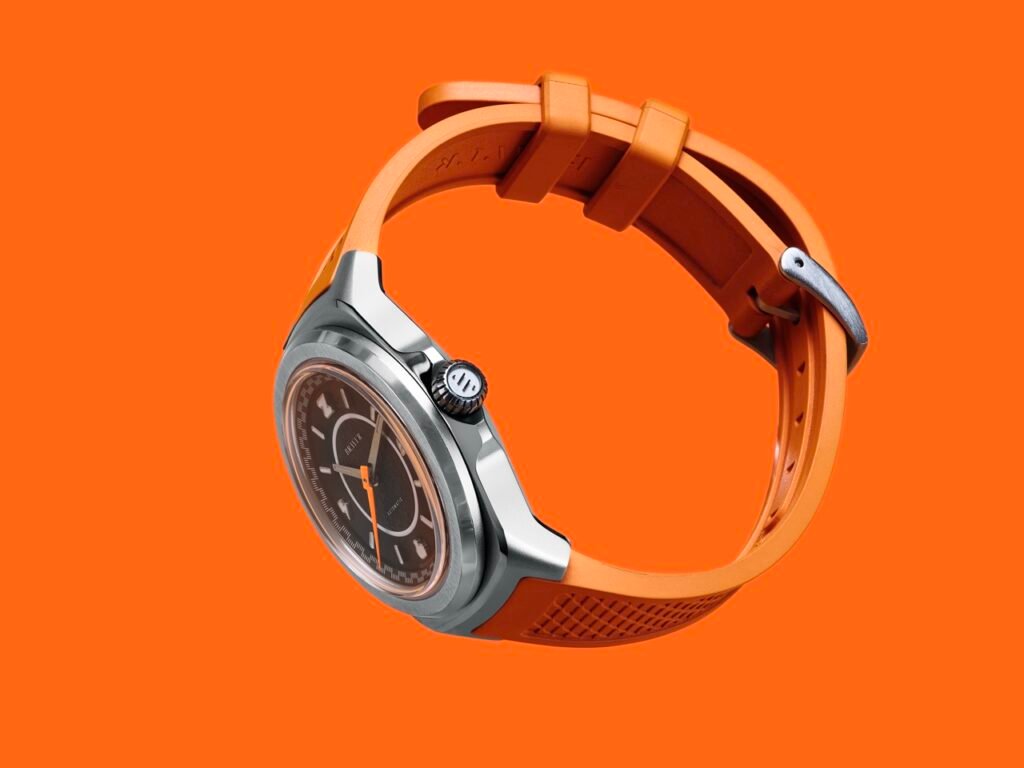
    This isn’t competition for Garmin, COROS or Suunto. The watch has zero GPS, zero heart rate monitoring and zero power. It’s a classic mechanical watch built around the automatic Sellita SW200-2 movement, the wind-by-wrist-motion mechanism used in proper Swiss timepieces.

    The specification reads like watchmaking, not sports tech:

    • 37 mm stainless steel case.
    • Sapphire crystal glass.
    • Water resistant to 100 m.
    • Assembled in Sweden.

    The package includes a vegetable-tanned brown leather bike bag.

    Zwift x Bravur limited-edition mechanical watch

    Where Zwift shows up

    All the detail sits on the dial. The Zwift logo sits at 12 o’clock, surrounded by references anyone who has ridden a virtual lap of Watopia will recognise. A power-up symbol sits at 3 o’clock, a lightning bolt for generated watts at 9 o’clock, and a thumbs-up, the platform’s “Ride On”, at 6 o’clock. Each watch’s individual number is engraved on the case back.

    It’s a gadget for insiders. Someone with no connection to Zwift will just see a nice, expensive watch. Someone who has spent hundreds of hours in the trainer’s pain cave will spot the details immediately.

    Does it make sense for a triathlete

    Practically none. You’ll still wear a GPS sports watch for training, and this one will sit in a drawer or on your wrist outside training hours. It’s a collector’s and lifestyle piece, more jewellery for cycling fans than sports equipment.

    The launch does point to a trend worth noting. Zwift, which built its position on trainers and data analysis, is moving into the luxury segment, a sign that endurance brands are increasingly targeting the lifestyle market and selling a sense of belonging to a community.

    Summary

    The watch is interesting but entirely unnecessary for training. The limited run of 100 will sell out fast among collectors and the platform’s most loyal fans. For amateurs counting watts and seconds, the basic tool remains GPS hardware with a heart rate strap, not a classic automatic that only measures time.

  • T100 returns to San Francisco: what to expect

    T100 returns to San Francisco: what to expect

    T100 returns to San Francisco, and this time not as a one-off attraction but as a fixed date on the PTO series calendar. After a year away, the bridges over the bay get another look at 100 km of suffering from the best in the world.

    The T100 distance

    The PTO T100 format is 2 km of swimming, 80 km on the bike and 18 km of running, 100 km in total. Shorter than a full IRONMAN, longer than a 70.3, sharper than a classic olympic. A winning time typically falls between 3:30 and 3:50 depending on the course.

    San Francisco is not a flat course. Bridges, wind off the ocean and the climbs on the Embarcadero make it a poor place to chase a world best.

    What is known about the bay course

    The swim takes place in San Francisco Bay. The water is cold, typically 13 to 15°C (55 to 59°F), with weak but constant currents. Wetsuits are mandatory.

    The bike normally heads across the Golden Gate Bridge towards Sausalito and back, and two crossings add up to roughly 3 km in a strong crosswind. Add the climbs in the Marin Headlands if the organisers keep them from previous editions.

    The run is the traditional Embarcadero loop, flat and even underfoot, but the sun and wind will break anyone who came off the bike badly hydrated.

    The field and the points

    T100 ranking points are what matters here. The series winner takes 200,000 USD, so each race carries real money alongside the prestige.

    In both the men’s and women’s races the fight for points has been running since the first start of the season. San Francisco sits in the middle of the year, so the ranking has already taken shape.

    The interesting split is between athletes arriving in full form and athletes using San Francisco as a tune-up for the IRONMAN World Championship. T100 is the season’s second front, and every athlete plays it with a different strategy.

    Coverage

    T100 coverage runs on PTO+ and on selected regional broadcasters.

    Why the course is worth watching

    Cold water, wind and a rolling profile put San Francisco much closer to a typical northern European race than to the heat of Hawaii. The useful thing to watch is how the front of the field handles fuelling with a cold swim followed by a hard bike.

    The bridges are a lesson in how not to blow apart on the bike, and that lesson transfers directly to anyone pacing a 70.3 on a similar profile.