Tag: Hardware

  • Garmin CIRQA: No Screen, No Subscription, $199

    Garmin CIRQA: No Screen, No Subscription, $199

    Garmin has trained us to expect watches that do everything and cost about as much as a used bike. Now it is going the other way. On 21 July the company unveiled CIRQA, its first screenless band, priced at $199.99 (€199.99 in Europe). Sales start on 24 July. This is not a sports watch for swimming and running, it is a device built for a different job entirely. Which is exactly why it is worth understanding what a screenless band is for in the first place.

    What it actually is

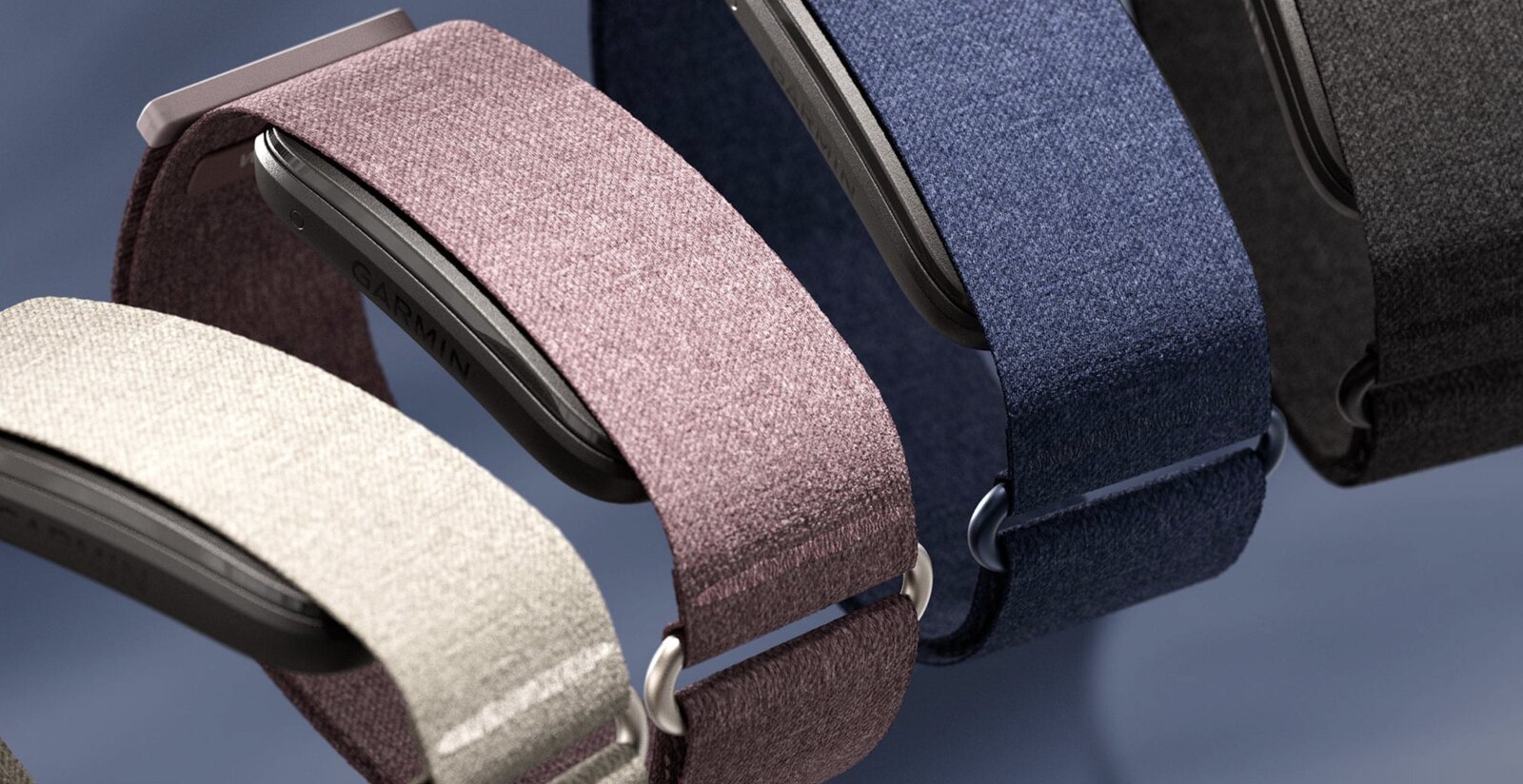
    CIRQA is a lightweight band that monitors health and recovery around the clock. There is no display, you read the data in the Garmin Connect app on your phone. The fibre-reinforced polymer casing weighs about 20 g with the strap. You wear it on the wrist or as an armband, and the fabric straps come in several colours (Black, Captain Blue, French Grey, Mauve, Dark Olive, among others) and two sizes (S/M and L/XL). The battery lasts up to 10 days, so you charge it roughly once a training block rather than every other day.

    No subscription, but a Connect+ option

    You buy the hardware once and get every core feature with no subscription. In a world where Whoop charges around $30 a month for access to your own data, that is a real argument. Garmin also offers an optional Connect+ plan at $6.99 a month with expanded analysis, but the basic metrics, Training Readiness, HRV Status, VO2max, sleep, are free.

    What it measures

    Despite having no screen, CIRQA collects exactly the data a triathlete watching their recovery cares about. It tracks heart rate, blood oxygen (Pulse Ox), skin temperature, stress and movement around the clock, and calculates the same metrics known from Garmin’s pricier watches:

    Recovery: Training Readiness, HRV status, time to full recovery.
    Fitness: VO2max, training status, Acute Load, Load Ratio, Load Focus.
    Sleep: sleep stages, sleep score, HRV, breathing, nap detection.
    Activity: automatic detection of runs and walks, manual assignment from more than 80 activity types in the Connect app.

    In other words, you get the backbone of Garmin’s recovery system in a cheap, comfortable package you can wear at night and at work.

    How it works alongside your multisport watch

    This is the part that matters most for a triathlete. Data from CIRQA flows into Garmin Connect and merges with the data from your sports watch. DC Rainmaker confirmed this in testing: wearing CIRQA on one wrist and a Forerunner 170 on the other, a Fenix 8 Pro automatically updated its stats with data from the band, including steps and training load.

    What does that mean in practice? If you wear, say, a Forerunner 965 for training and CIRQA for the rest of the day, in the office, at night, in the shower, Connect gets a full 24/7 picture. Your 965 realistically lasts about 14 to 18 days on a charge (23 days claimed in smartwatch mode). CIRQA adds another 10 days of continuous monitoring without charging the watch. Together, they close the gaps in recovery and sleep data that appear whenever the watch is off your wrist or on the charger.

    Who it makes sense for, and who it does not

    Let’s be clear about what CIRQA does not do. It has no screen, so it will not show you pace, power or heart rate on the course. This is not a device for racing, you still need a multisport watch or a bike computer for training and competing in your disciplines. CIRQA will not replace a Forerunner or a Fenix.

    It makes sense as a second device dedicated to recovery. Your sports watch handles training and racing, while the rest of the day, at night, in the office, in the shower, a light band that you barely need to charge tracks recovery and sleep. For a triathlete who takes Training Readiness and HRV seriously but does not want to sleep with a heavy watch on their wrist, it is a neat solution.

    If you are after your first and only device, one that also needs to track your sessions, this is not it. In that case, spend more on a watch with a screen and sport profiles.

    Verdict

    CIRQA is a smart move: Garmin takes its proven recovery system, drops the screen, drops the subscription, and brings the price down $199 (€199.99). For anyone already tracking form through Training Readiness and HRV who wants a comfortable round-the-clock sensor, it is one of the more interesting launches of the summer. For anyone who wants a single device for everything, it is too big a compromise.

  • Triathlon Week: Roth World Record, Hamburg Sabotage

    Triathlon Week: Roth World Record, Hamburg Sabotage

    Long-distance triathlon got a new world record in Roth. Hamburg showed a darker side of the sport alongside a dominant short-course weekend. On the domestic front, Bydgoszcz, in Poland, drew close to five thousand athletes. On the gear side, COROS pushed a free update that takes aim at Garmin. Here is what mattered this week.

    1. Sam Laidlow breaks the iron-distance world record in Challenge Roth

    Sam Laidlow defended his Roth title and set a new world record of 7:21:04, improving on Kristian Blummenfelt’s previous mark of 7:21:12 from Cozumel.

    Blummenfelt finished second, in 7:30:15. Third place went to debutant Rico Bogen, who also posted the fastest bike split of the day: 3:54:45, against Laidlow’s 3:54:58. That is an exceptional level for a first start over full distance.

    The women’s race went to 24-year-old Alanis Siffert, in 8:09:09, the youngest winner in Challenge Roth history. The Swiss athlete led on the bike and the run, closing with a marathon of 2:45:00. Lucy Charles-Barclay finished second, Kat Matthews third.

    2. Matthew Hauser dominates WTCS Hamburg

    Matt Hauser won the men’s race for the third year running, in 50:07, beating Vasco Vilaça and Henry Graf with room to spare.

    In the women’s race Leonie Périault defended her title, improving her time from last year by 30 seconds to 55:51. Lisa Tertsch was second. In the mixed relay, France took gold and an automatic qualification spot for the Los Angeles Games, fielding Périault, Richard, Lombardi and Coninx.

    3. World Triathlon Para Series makes its Hamburg debut

    Hamburg hosted the fourth round of the World Triathlon Para Series for the first time. It is an important stop on the calendar, letting athletes test their form against strong competition. The courses through central Hamburg suited fast racing, and the event underlined how quickly the discipline is developing internationally.

    4. Julie Derron books her Kona slot at IRONMAN Thun

    Julie Derron won IRONMAN Thun, in Switzerland, in 8:42:40, taking a direct qualification spot for the IRONMAN World Championship in Kona.

    Derron started well behind swim leader Imogen Simmonds but was unstoppable on the bike and the run, winning by nearly 14 minutes (Simmonds finished in 8:56:27). Julie joins her sister Nina in Kona; Nina had already qualified at Lanzarote.

    5. Nearly five thousand athletes at Enea Bydgoszcz Triathlon

    Bydgoszcz, in Poland, hosted the 12th edition of its triathlon, drawing close to 5,000 athletes across distances from Super Sprint to half-distance.

    On the half-distance course, Piotr Klupczyński was the only athlete to break four hours, in 3:59:56, built on a 1:21:42 run. Barbara Streng won the women’s race. Over the shortest distance, Wiktor Brojerski won in 48:19, ahead of Jan Krakowski and Wojciech Szyp.

    6. Investigation into course sabotage at IRONMAN Hamburg

    Hamburg police are still investigating an incident on the bike course. Metal tacks and glass fragments scattered along the route caused widespread tyre and tube damage, forcing 300 to 400 athletes to stop and more than a hundred to withdraw completely.

    Organisers confirmed the course had been swept before the start, pointing to deliberate action taken during the race itself, near Kirchwerder. Local authorities suspect a link to resident protests against the road closures. Affected athletes were offered free entries to other 2026 races or to the 2027 Hamburg edition, and the incident is already pushing organisers worldwide to tighten security procedures.

    7. COROS chases Garmin with a free update

    COROS released a major software update for the Pace 3 and newer watches, adding features aimed squarely at its main rival’s strengths:

    • Pace Strategy: a race-plan generator built around the course profile, FTP, and a three-day weather forecast broken down by segment.
    • Hill Alerts: real-time notifications for climbs and descents, similar to Garmin’s ClimbPro.
    • Heart Rate Recovery: tracks the drop in heart rate during rest and exactly two minutes after finishing an effort.

    All of these are free. COROS is visibly closing the gap on the market leader, building loyalty without adding hidden subscription costs.

    8. Cooling materials arrive on the start line

    Mid-July also brought a clear rise in interest in thermoregulation. Triathlon clothing makers, Castelli among them along with smaller, more experimental brands, are pushing race suits built with graphene and UV-reflecting fibres. Combined with aero helmets designed with airflow channels for triathlon cruising speeds, the fight for seconds over iron distance is moving from wind tunnels into thermal labs. This season, the body’s ability to shed heat has become as important as saving watts.

  • Zwift’s $1,195 Watch That Measures Nothing

    Zwift’s $1,195 Watch That Measures Nothing

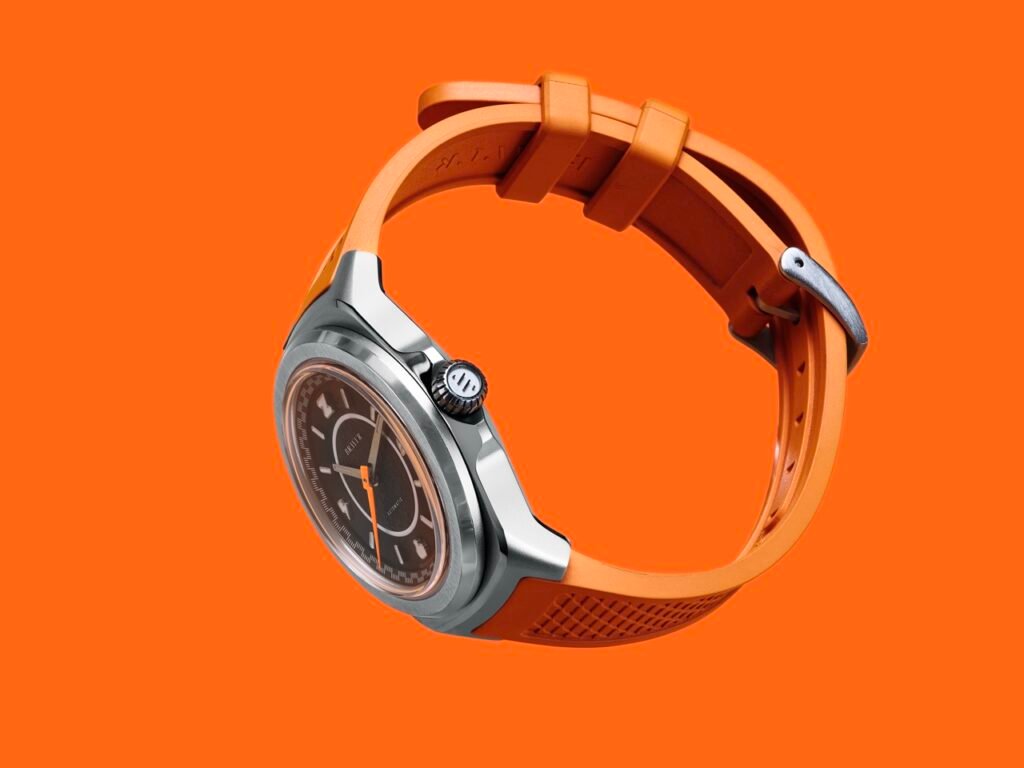
    The company that taught us to watch watts through an entire winter of indoor training has just released a watch that won’t show a single one. Zwift has teamed up with Swedish watchmaker Bravur to build a limited-edition mechanical watch. The price is about $1,195 (before US tax), €1,395 in Europe, and £1,099.95 in the UK. Only 100 numbered pieces went out worldwide.

    A watch that deliberately isn’t a smartwatch

    This isn’t competition for Garmin, COROS or Suunto. The watch has zero GPS, zero heart rate monitoring and zero power. It’s a classic mechanical watch built around the automatic Sellita SW200-2 movement, the wind-by-wrist-motion mechanism used in proper Swiss timepieces.

    The specification reads like watchmaking, not sports tech:

    • 37 mm stainless steel case.
    • Sapphire crystal glass.
    • Water resistant to 100 m.
    • Assembled in Sweden.

    The package includes a vegetable-tanned brown leather bike bag.

    Zwift x Bravur limited-edition mechanical watch

    Where Zwift shows up

    All the detail sits on the dial. The Zwift logo sits at 12 o’clock, surrounded by references anyone who has ridden a virtual lap of Watopia will recognise. A power-up symbol sits at 3 o’clock, a lightning bolt for generated watts at 9 o’clock, and a thumbs-up, the platform’s “Ride On”, at 6 o’clock. Each watch’s individual number is engraved on the case back.

    It’s a gadget for insiders. Someone with no connection to Zwift will just see a nice, expensive watch. Someone who has spent hundreds of hours in the trainer’s pain cave will spot the details immediately.

    Does it make sense for a triathlete

    Practically none. You’ll still wear a GPS sports watch for training, and this one will sit in a drawer or on your wrist outside training hours. It’s a collector’s and lifestyle piece, more jewellery for cycling fans than sports equipment.

    The launch does point to a trend worth noting. Zwift, which built its position on trainers and data analysis, is moving into the luxury segment, a sign that endurance brands are increasingly targeting the lifestyle market and selling a sense of belonging to a community.

    Summary

    The watch is interesting but entirely unnecessary for training. The limited run of 100 will sell out fast among collectors and the platform’s most loyal fans. For amateurs counting watts and seconds, the basic tool remains GPS hardware with a heart rate strap, not a classic automatic that only measures time.