Tag: Hardware

  • Suunto Race 2 Gets Auto Transitions, With a Catch

    Suunto Race 2 Gets Auto Transitions, With a Catch

    Suunto has spent years chasing Garmin on multisport features. A software update from January 2026 (version 2.50.26) closes a good chunk of that gap: the Race 2 now gets automatic transitions in triathlon mode, heart rate broadcast to a bike computer, and swim drills. The catch is that the auto-transitions have a bug that corrupts your data at the finish.

    What the update adds

    The Race 2 software update, a staged rollout from 7 January 2026, adds a package of features triathletes have been waiting for since launch:

    • Automatic transitions in the preset Triathlon and Swimrun modes: the watch detects the change of discipline on its own, no need to tap anything in the transition zone.
    • Default modes for duathlon, aquathlon and swimrun: ready made profiles that were missing before.
    • Heart rate broadcast: the Race 2 sends wrist heart rate to a bike computer or trainer.
    • Swim drills: support for technique sets in the pool.
    • Looped multisport: you can cycle back through the same set of disciplines without ending the session, useful for swim-bike-swim sessions.

    The features are catching up, not a revolution. Garmin and COROS have had auto-transitions and heart rate broadcast for a while. For a Race 2 owner it is still a real step up, and one less reason to look enviously at the Forerunner.

    The catch: auto-transitions corrupt the data file

    That is where the problem starts. According to tests by the5krunner, in the current software version an automatic transition saves the whole activity as one continuous file, with no split into swim, T1, bike, T2 and run segments.

    In other words, the watch totals your overall time but does not break it down by discipline or transition zone. For anyone who wants to work out after a race how much time they actually lost in T1, or what their run split looked like, that is useless.

    The fix for now is simple: manual transitions save every segment correctly. Until Suunto fixes the recording, tap the button in the transition zone yourself. It costs one second and gets you clean data per discipline.

    Who this is worth it for

    If you already own a Race 2, update and use it. Heart rate broadcast and swim drills work without issue, and the default duathlon and aquathlon modes genuinely make life easier.

    If you are choosing a triathlon watch from scratch, the Race 2 with this update is back in the running as a sensible alternative to the Garmin Forerunner 970, especially on price: the Race 2 starts at $499 in the US, while the Forerunner 970 launched at $749.99. Treat auto-transitions as a feature still in progress, not a reason to buy. Until race day, rely on the manual button.

  • FLOWBIO: A Sweat Sensor That Measures Sodium Live

    FLOWBIO: A Sweat Sensor That Measures Sodium Live

    Hydration in triathlon is still a guessing game. Most of us have no idea exactly how much fluid and sodium we lose through sweat, so we go on generic advice and then fade in the heat, cramp, and lose watts in the final kilometres of the bike leg. FLOWBIO promises to turn that guesswork into data. It is a sensor that analyses your sweat during training and tells you what you are actually losing.

    What it actually measures

    FLOWBIO measures two things: fluid loss rate and sodium loss. The sensor captures sweat through a tiny channel, using the pressure your own sweat glands generate, and there is no needle involved. That is the key difference from the now-discontinued Supersapiens, which pierced the skin. The light module (about 10g) clips onto a chest strap, and the reading updates every few seconds.

    The data lands in the FLOWBIO app, where the in-house AHi engine (Advanced Hydration Intelligence) combines it with intensity and ambient temperature and outputs a specific plan: how much to drink, when, and why. You go from “I hope I took in enough electrolytes” to knowing how much sodium you will lose over a 70.3 at 30°C (86°F).

    FLOWBIO sweat sensor mounted on a chest strap

    Does it work: the hard numbers

    The manufacturer has not hidden behind marketing and published an independent, peer-reviewed validation in the journal Frontiers in Physiology (2025). The study compared the sensor against lab reference methods: body weighing for fluid loss, and flame photometry plus an L’Aqua Twin analyser for sodium. The team was led by David Bandiera, with Yannis Pitsiladis among the co-authors, and the work was carried out at the University of Rome Foro Italico and at CREPS Montpellier.

    On accuracy: in lab conditions FLOWBIO claims 90% accuracy. In the field, it drops to up to 83% for sodium (a difference of up to 180mg, about six times less than a pinch of salt) and 73% for fluids (a difference of up to 250ml). That is not laboratory perfection, but for an amateur planning a drinking strategy for a long race, it is a step up from generic tables.

    Device compatibility and battery

    This is the freshest news. A live data feed to Wahoo head units launches in late June 2026, putting sweat loss straight on your bike computer screen mid-ride. A live view on Garmin watches and head units is in internal testing and is due to reach beta later in the summer. Long term, FLOWBIO is built to work with Garmin, Wahoo, COROS and Zwift.

    Battery life is a strong point: over 100 hours of use, charged over USB-C. The sensor is reusable, with no disposable inserts and no extra subscription; you pay once.

    SpecFLOWBIO
    MeasuresFluid and sodium loss from sweat
    MountChest strap, about 10g
    NeedleNone, sweat collected through a channel
    Battery100+ hours, USB-C
    ConnectivityGarmin, Wahoo, COROS, Zwift
    Live data (Wahoo)Late June 2026
    Live data (Garmin)Beta later in summer 2026

    Price, and who it is for

    International pricing runs about £295 to £379, or $399. That puts it firmly in “serious gadget” territory, not an impulse buy. But if you race 70.3 and full IRONMAN distance, fight the heat, or cramp regularly, a personalised sodium strategy can be worth more than another pair of aero socks.

    It is not for someone running 40-minute sessions in cool weather with no gut issues. Hydration only becomes critical at long efforts and in the heat, and that is where FLOWBIO earns its place.

  • Garmin Forerunner 70 and 170: New Running Watches

    Garmin Forerunner 70 and 170: New Running Watches

    On 12 May 2026, Garmin announced two new running watches, the Forerunner 70 and Forerunner 170, on sale from 15 May. Both land in the entry to mid segment with bright AMOLED screens and a feature set that used to be reserved for pricier models. Before getting too excited about the price, there is one catch, and it matters specifically for triathletes.

    What both models offer

    Forerunner 70 and 170 share the same platform: a 1.2-inch AMOLED screen, touch control plus five buttons, the Elevate Gen 4 heart rate sensor (the same one in the FR165), and 50 m (5 ATM) water resistance. Both carry GPS and more than 80 sport apps, including pool swimming and cycling. On the training side: training readiness, training status, wrist-based running power, running dynamics, HRV, sleep tracking, daily suggested workouts and Garmin Coach plans, including new run/walk plans for beginners.

    Smart notifications, LiveTrack and the safety features work once the watch is paired with a smartphone.

    US pricing: the Forerunner 70 is $249.99, the Forerunner 170 is $299.99, and the Forerunner 170 Music, with onboard storage for music, is $349.99.

    What sets the Forerunner 170 apart from the 70

    The Forerunner 170 adds three things the 70 does not have:

    • Barometric altimeter, for floor counting and more accurate elevation on runs and rides
    • Open water swimming mode, tracking distance and pace
    • Garmin Pay, contactless payments from the wrist, with supported banks

    The Forerunner 170 Music adds onboard storage for music and podcasts, so it plays through wireless headphones without a phone nearby. Battery life on the 70 runs to 13 days in smartwatch mode (or 23 hours of GPS); the 170 manages 10 days, since the altimeter draws more power.

    The key gap: no multisport mode

    This is where it matters for triathletes. Neither watch has a multisport or triathlon mode. There is no automatic switch from swim to bike to run, each activity has to be ended manually. That is the real gap against the FR265 (from $449.99) or the Forerunner 570/970, which carry a full triathlon mode with automatic transitions, post-race analysis and dedicated data per segment.

    For someone training running, and maybe cycling, as separate disciplines, the Forerunner 70 is a strong watch for the money. For a triathlete who wants one watch for race day, it is not the right model.

    Who should buy which

    Forerunner 70 suits a runner starting out who wants GPS, AMOLED and solid data without overpaying. It also works as a second, everyday watch for a triathlete, for zone 2 sessions and day-to-day HRV tracking, without wearing out the pricier watch.

    Forerunner 170 and 170 Music suit a runner who wants open water tracking and music without carrying a phone. Locking into a long run with a playlist and no distractions is where the value sits.

    A triathlete looking for one watch to train and race with should look at the FR265, or wait for a price drop on the FR570. The Forerunner 70 and 170 are solid running watches, but they are not built for triathlon.

  • Garmin Instinct 3 AMOLED Review: A Triathlon Watch

    Garmin Instinct 3 AMOLED Review: A Triathlon Watch

    The Instinct 3 is for anyone who wants a Garmin with a proper AMOLED screen without paying Fenix 8 money, and without worrying that a crash on the bike will kill the watch. Military-grade durability, automatic T1/T2 transitions and Training Readiness, at $449.99 in the US for the 45mm AMOLED model. The question is what here is genuinely good, and what is a compromise.

    What is new in version 3

    The Instinct 3 gets an AMOLED screen, and it is a change you feel. Previous generations had a matte MIP panel at 176×176 px. The new 45mm version serves up 416×416 px on a 1.2-inch display. Colour, contrast and readability on data screens are not even comparable to the old version.

    It also gains a built-in LED flashlight at the top of the case. It sounds like a gimmick, but it is genuinely useful when carrying gear across a dark transition zone before sunrise.

    New too is Training Readiness, a feature Garmin has finally brought to the Instinct line. It analyses sleep, HRV, training load and recovery to tell you, plainly, each morning whether you can push hard or should back off.

    How it works for triathlon

    Automatic T1/T2 transitions work straight out of the box. Start a triathlon profile and the watch detects the switch from swim to bike to run without you touching anything. It also supports duathlon and multisport.

    Training data on offer at the start line: VO2max, heart rate zones, training effect, training load, race time prediction, interval training with custom sessions, and training plans through Connect IQ. Pool and open-water swimming both get full support.

    What is missing: map navigation. The Instinct has GPS but no tile maps. Anyone riding new routes and needing a map should look at the Fenix or Epix instead.

    A touchscreen? Not on the AMOLED version. That is a deliberate trade-off from Garmin, for battery life and durability, but it is worth knowing before buying.

    Battery: which one to pick

    The Instinct 3 comes in four variants: AMOLED 45mm, AMOLED 50mm, Solar 45mm and Solar 50mm. For a triathlete that is an important decision.

    AMOLED 45mm: up to 18 days in battery-saver watch mode, or around 7 days with always-on display, and about 23 hours of multiband GPS, more than enough for a full IRONMAN.

    Solar 45mm: up to 40 days standby with regular sun exposure, effectively indefinite at around three hours of sunlight a day, but with the MIP screen and its lower resolution.

    For a triathlete racing through a full season and training regularly, the AMOLED makes more sense: the training data is simply easier to read during intervals and on the bike.

    Price and where to buy it

    Garmin lists the Instinct 3 AMOLED 45mm at $449.99 in the US. The 50mm version is $499.99. Both prices are Garmin’s own suggested retail; discounts at other retailers can bring the AMOLED 45mm well below that figure.

    For comparison, the Garmin Forerunner 965 (full maps, AMOLED, triathlon profile) runs $599.99 in the US. The Instinct 3 is therefore a solid option for anyone who wants a Garmin with AMOLED and a triathlon mode without spending a fortune and without needing maps.

    Verdict

    The Instinct 3 AMOLED is an honest triathlon watch for an athlete who:

    • trains regularly and wants Training Readiness plus automatic transitions,
    • prefers a mechanically tough watch (MIL-STD-810 rated for shock and temperature, 10 ATM / 100 m water resistance),
    • does not need maps or a touchscreen,
    • does not want to overpay for a Fenix 8.

    If navigation is the priority, look elsewhere. If training and durability are the priority, the Instinct 3 AMOLED is a solid choice at a reasonable price.

  • Wahoo KICKR Core 2 Review: Wi-Fi and Zwift Cog for $399

    Wahoo KICKR Core 2 Review: Wi-Fi and Zwift Cog for $399

    The Wahoo KICKR Core 2 is the first mid-range trainer where Wahoo seems to have understood that the mid-tier does not have to be a stripped-down version of the flagship. Starting price is $399 / €399 / £399. At that price you get Wi-Fi as standard, a Zwift Cog with Click v2 included, and 10Hz Race Mode: features that a year ago were not even on the $800 KICKR V6.

    This is the biggest overhaul of the Core since the original launched in 2018.

    What changed

    Wi-Fi as standard. Until now, Wi-Fi was reserved for the KICKR V6 and KICKR Move, trainers north of $1,000. Now it comes in the Core for $399. Wi-Fi means more stable pairing with the app, automatic firmware updates and faster syncing with other devices.

    Zwift Cog and Click v2 in the box. The Cog is a cassette-replacement cog compatible with almost any 8 to 12-speed bike, no cassette swap required. Click v2 is a new remote with two double buttons for shifting virtual gears in Zwift. Wahoo gives a choice: the version with Cog and Click, or a classic 11-speed Shimano cassette.

    Race Mode. New for this generation; the original Core did not have it. Race Mode raises the frequency of power-data transmission from 1Hz to 10Hz over Wi-Fi. In practice, the app sees your watts with ten times less lag. In the critical moments of a virtual race, an attack on a climb, a counterattack on a descent, that is the difference between success and getting dropped from the front group. It is the exact same 10Hz Race Mode found on the flagship KICKR V6.

    Other additions: a Sensor Hub (a Bluetooth bridge for connecting sensors to the app), encrypted Bluetooth pairing (compliant with EU standards), redesigned flat legs for better stability and easier setup, and status LEDs showing connection and Wi-Fi status.

    Technical specifications

    SpecWahoo KICKR Core 2
    Maximum power1,800 W
    Maximum simulated incline16%
    Claimed accuracy+/-2%
    Weight13.6 kg
    ConnectivityWi-Fi, ANT+, Bluetooth
    Powermains
    Typedirect drive

    1,800 W of maximum power is a figure the typical age-grouper will never touch. 16% incline covers most simulated climbs on Zwift; Alpe du Zwift tops out at 14%.

    Who it’s for

    A trainer for the age-grouper who:

    • wants to race on Zwift and needs a fast, responsive trainer (Race Mode)
    • does not want to buy a bigger toy every year, but is tired of trainers without Wi-Fi
    • already has a triathlon or road bike and wants to stay with direct drive
    • trains 10 to 15 hours a week, more than an occasional session, less than a professional power database

    Not a trainer for:

    • someone who wants an integrated Zwift Ride plus trainer setup, a separate package that runs roughly $800 to $1,050 more
    • someone who already has a KICKR V6 or Move, where the difference is not worth the upgrade
    • a casual rider who opens Zwift once a month, for whom an older Core still on the secondhand market for about $320 to $400 will do

    The competition: what to pick instead

    Zwift Hub One ($599 in the US, £549 in the UK, with a year of Zwift included) is the closest rival. On the plus side, it also includes a Zwift Cog and identical virtual shifting. On the downside, no Race Mode, no Wi-Fi, and a narrower app ecosystem than Wahoo. The bundled Zwift subscription helps first-timers, but priced against the trainer alone, the Core 2 comes out cheaper.

    Tacx Flux S ($749.99 in the US) has no Wi-Fi, weaker claimed accuracy (+/-3%) and a lower maximum power ceiling. It suits riders who do not need the top-end features.

    Saris H4 ($999.99 in the US) costs more and is very durable, but does not have Wi-Fi as standard. That is exactly where Wahoo sets itself apart.

    Summary

    The Wahoo KICKR Core 2 is the best direct-drive trainer in its price bracket for 2026. Wi-Fi as standard, 10Hz Race Mode and a Zwift Cog in the box are a combination nobody else offers at this price. Wahoo has understood that winning over the age-grouper takes real features, not marketing polish.

    Is it a KICKR V6 killer? Not quite: the V6 runs quieter and has a better road feel. But for 80% of triathletes, the Core 2 is enough. Buying a first serious trainer: buy this one. Upgrading from an older Core: weigh whether Wi-Fi and Race Mode are worth $399. For Zwift racing, yes. For zone 2 aerobic base work, not necessarily.

  • Flash News: fēnix 9, Frodeno’s UTMB Win, Wołos Worlds

    Flash News: fēnix 9, Frodeno’s UTMB Win, Wołos Worlds

    A week in which Garmin unveiled a new flagship, and Jan Frodeno reminded everyone that winning does not stop when a career in professional triathlon ends. In Japan, two Polish riders reached the podium at a world championship, a full-distance race took place near Bydgoszcz, Poland, and one red card in Kraków, Poland showed how strictly IRONMAN now enforces its newest rule. Here is the roundup for 22-28 August.

    1. Garmin unveils the fēnix 9 and 9 Pro

    Garmin’s launch was the loudest release of the week. During a livestream on 25 August, Garmin unveiled the fēnix 9 and fēnix 9 Pro. The base version costs $1,000, and the Pro and Pro Solar models cost $1,100. Orders open today, 28 August.

    Internal storage grew from 32 to 64GB, and the AMOLED display now reaches about 2,000 nits, roughly twice as bright as the fēnix 8. The watch comes in three sizes, 43, 47 and 51mm, with the solar versions available only in the two larger sizes. All models get a titanium case back.

    Among the software additions, Garmin showed off Epic, a feature that stitches multi-day expeditions into one story built from photos, health data and results.

    2. Frodeno wins his age group at UTMB

    On 27 August the three-time IRONMAN world champion started OCC, the 50K finale of the UTMB Mont-Blanc series. At 61.4 km (38 miles) through the mountains, it was the longest run of Jan Frodeno’s life. He finished in 6:31:55, winning the M45-49 category by almost 25 minutes and placing 58th in a field of about 2,000.

    The best number is a different one: his time was faster than the winning result in the younger M40-44 category (6:33:47). Frodeno turned 45 on 18 August, so he had moved into the new age group just nine days before the start.

    This was not a race open to just anyone. OCC is the UTMB World Series final, and the entire amateur field had to qualify first. Three years after retiring from professional triathlon, Frodeno won an age-group category in a race that requires qualification to enter.

    3. Wołos crowned world champion in Japan, Miernik takes bronze

    On Thursday 27 August, the UCI Gran Fondo World Championships got underway in Niseko on Hokkaido, held in Asia for the first time in the event’s history. The opening event was an individual time trial, 15 km with the start and finish in Kyowa.

    In the K35-39 category, Ewelina Wołos was fastest in 20:17.87, an average of about 44.3 km/h. Britain’s Hayley Simmonds clawed back time in the second half of the course but fell short by 5.98 seconds. Bronze went to a second Polish rider, Ewelina Miernik (20:33.14).

    The new world champion’s name will be familiar from triathlon. Wołos won the K35-39 category at the IRONMAN 70.3 World Championship in Marbella in 4:59:30. She turned professional in February 2026, became Polish duathlon champion in May, and placed 11th at Challenge Roth in a personal best of 9:14:19. She closed her triathlon season on 11 August and switched to cycling. Clearly, the switch worked. The time trial field included 402 riders from 52 countries.

    4. Red card for filming his own finish

    Footage from the finish line at Enea IRONMAN 70.3 Kraków circulated across Polish social media this week. It shows an athlete filming his own finish on a small camera, crossing the line, and receiving a red card from a race official moments later. Grzegorz Dubowski appealed the decision. The appeal was rejected and the disqualification stood.

    The reason is not in doubt. In February 2026, IRONMAN tightened its rulebook, adding the line: “The use of any device (telephone, video camera, camera, glasses with a recording function, etc.) to take photos or record video during the race is prohibited. The athlete will be disqualified.”

    In practice, that removes everything at once: course selfies, a GoPro on the helmet, a live stream, camera glasses. Previously, carrying a phone was allowed as long as it was not used in a distracting way; now pressing record alone wipes the result. Dubowski said the camera was waiting for him 200 metres before the finish and that he had no idea about the change. Check the rulebook before your next start, since after eight hours on course a single gesture can erase the entire day.

    5. Leipzig debuts on the 70.3 calendar

    On Sunday 23 August, the first edition of IRONMAN 70.3 Leipzig took place. Wilhelm Hirsch won the men’s race in 3:30:59, ahead of Rico Bogen (3:32:59) and Pierre Dupuy (3:34:14).

    In the women’s race, Caroline Pohle had no rivals and finished in 3:53:42. Bianca Bogen was second, more than eleven minutes back (4:05:06), and Brooke Gillies took third seven seconds behind her (4:05:13).

    6. Borówno: 79 finishers on the full distance

    On Sunday 23 August, the Ocean Lava Metalkas Triathlon Polska took place near Bydgoszcz, Poland. Marcin Rodziewicz was fastest over the full distance in 9:07:08. The full 3.8 km / 180 km / 42.2 km was completed by 79 athletes, including 5 women.

    The swim took place on Lake Borówno, four laps for the full distance and two for the half. The finish and T2 transition were at the Zawisza sports complex on Gdańska 163 in Bydgoszcz, so the final kilometres of the run passed through the city. Three distances were on offer: sprint, half and full.

    The event is a veteran on the Polish calendar, held since 1997. For a full-distance race without a Hawaii-sized entry fee, this is the address.

    7. Räppo wins again in Tallinn

    On the same day, 23 August, Henry Räppo won IRONMAN 70.3 Tallinn for the second time. The Estonian crossed the line in 3:38:31, with Hannes Butters (3:39:38) and Enzo Bourdon (3:41:12) following.

    Italy’s Marta Bernardi won the women’s race in 4:12:04. The rest of the podium was tighter, with three seconds separating Sandra Huon (4:13:05) from Liis Kapten (4:13:08).

    8. Lima goes to the Americans, Molėtai blown out by weather

    Team USA swept the Pan American Cup in Lima. Carter Stuhlmacher won the men’s race after posting the fastest swim of the field (9:41 over 750m) and exiting the water 4 seconds clear. Foster Wilfong took silver. He trailed his teammate by 58 seconds out of the water but closed the gap in the bike group and ran the fastest split of the day (14:20 over 5 km).

    In the women’s race, Faith Duncan added a second win of the season after July’s Magog. The American rode the fastest bike split of the day (30:48), was first into T2, and added the fastest run (15:53), leaving experienced Elizabeth Bravo behind.

    Europe fared worse. The Junior Cup finals in Molėtai, Lithuania were cancelled because of weather, a season that had already lost races to heat this time lost one to the opposite extreme.

    Frodeno’s age-group win at UTMB and Wołos in the rainbow jersey are the week’s two best stories. The one with the most practical consequences is the third: since this season, a camera on an IRONMAN course wipes the result.

    9. WTCS Weihai: Beaugrand chases the title

    Tomorrow, 29 August, the WTCS series returns to Weihai for the third time running. The women’s start list has 55 names, including the last three world champions. The field is effectively complete.

    The most interesting situation belongs to Cassandre Beaugrand. The Olympic champion is sixth in the series standings with three results from four possible starts, so she needs points. Lisa Tertsch and Beth Potter, meanwhile, are defending their lead over the Frenchwoman.

    In the men’s race, remember the name Solomon Okrafo-Smart. The Briton will make his WTCS debut straight off his first World Cup win in Edmonton.

    10. Philipp heads to Kona after three races in a row

    Laura Philipp demolished the field at Kalmar two weeks ago. This Sunday she lines up at 70.3 Zell am See, then heads to the world championship in Nice, then straight to Hawaii. Three starts in under a month and a half before the season’s toughest race is a deliberate change after last year’s Kona, where the German defended her number one and finished third.

    “I think I overdid the preparation, because I really wanted to be ready for the heat and set myself the goal of winning,” she said on The Women’s Race podcast. “There’s a thin line between wanting something and wanting it too much.”

    Last year she spent weeks in isolation on Maui, then walked into Kona race week with a full schedule of champion’s duties. This year she will fly to the island two weeks before the start, and that is it. “Nobody can guarantee it will work. Nobody can guarantee it either if you focus on nothing but Hawaii from now on and grind through every session.”

    11. What’s next: Zell am See-Kaprun

    On Sunday 30 August, the 70.3 calendar moves to Austria for IRONMAN 70.3 Zell am See-Kaprun. The Alpine course usually rewards strong cyclists, so times will be noticeably slower than in flat Leipzig.
  • COROS Replaces Watches Bricked by Firmware Update

    COROS Replaces Watches Bricked by Firmware Update

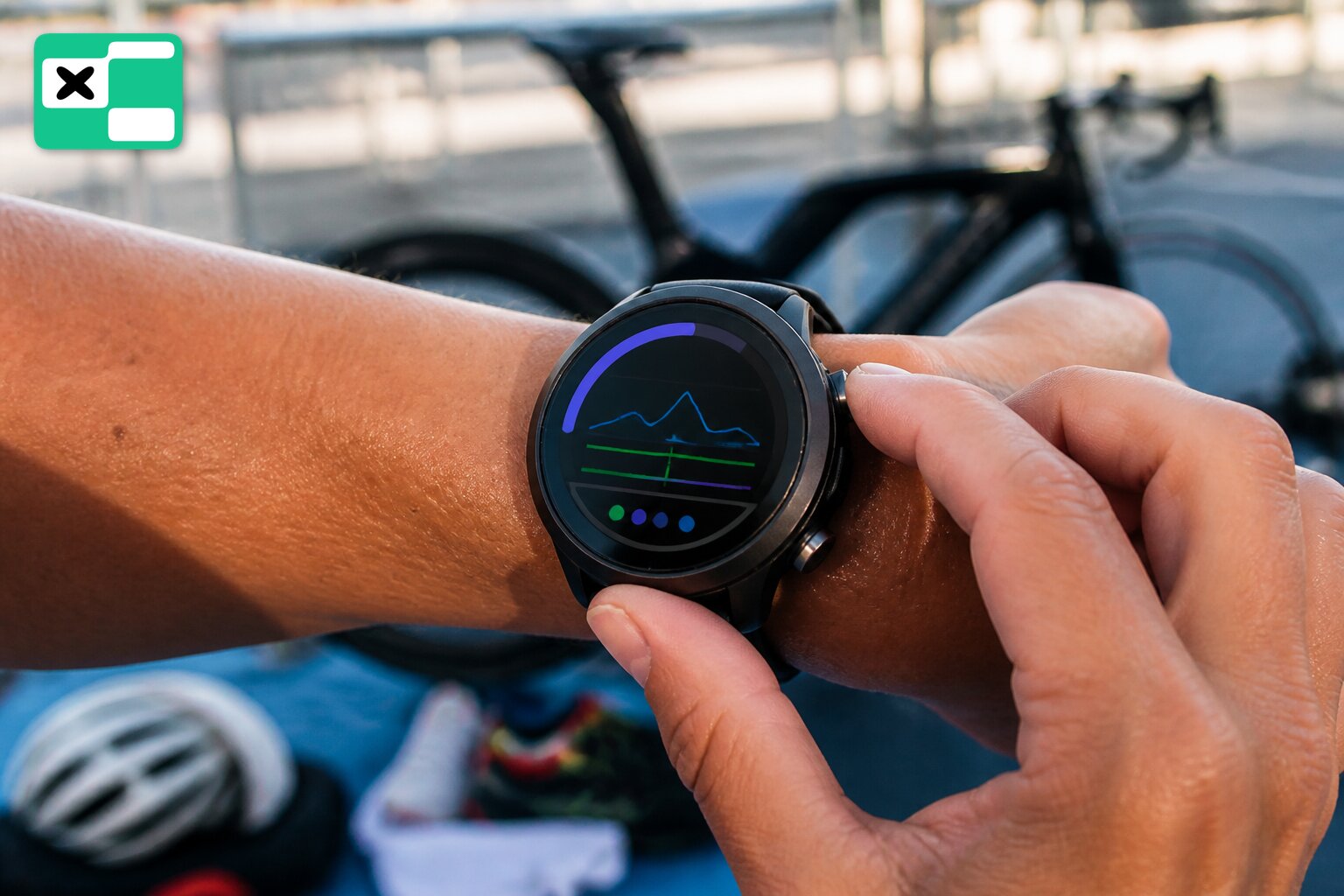
    You update the firmware on your watch and think nothing more of it. A few days later, the device will not turn on. For some COROS owners, the last few weeks have gone exactly that way. The manufacturer has acknowledged the problem and is replacing the affected watches.

    What actually went wrong

    The story was first reported by DC Rainmaker, one of the most trusted reviewers in endurance sports tech. According to his reporting, reports have clearly risen of COROS watches that stop working after the firmware update from mid-May 2026.

    The most deceptive part is that the failure usually does not happen right away. The watch keeps working normally, then stops turning on days or weeks later. Warning signs sometimes appear first: odd behaviour, a sharp drop in battery life, and in some cases a sticking rotating crown. Because of that delay, it is hard to connect the failure to the update.

    In practice, this is bricking. The device stops responding to charging or to restart attempts. Once a watch fails this way, there is no rolling back to a previous firmware version and no reviving it on your own. For a triathlete mid-season, building training around heart rate and power data, that is losing your data rhythm at the worst possible time.

    COROS acknowledges the problem and replaces the hardware

    This is where it gets better, because COROS has not swept the issue under the rug. The company is replacing the affected devices. Darian Allberry, Head of Product Marketing and Support, confirmed it on 17 June 2026:

    For anyone who reaches out to us and whose device has failed following the recent firmware update, we are replacing those units.

    Darian Allberry, COROS, quoted by DC Rainmaker

    That is a translation of the original statement, but the meaning is clear. If your COROS failed after the May update, you are entitled to a replacement. You do not need to prove you did anything wrong. The manufacturer shipped a faulty update. The scale is clear from a figure the company itself provided: within a 72 hour window, over 100 reports came in about watches that had stopped working.

    Which models are affected

    To be straight about it, COROS has not published a closed list of models. What the company has said points to one thing: the problem is hitting watches that are two to four years old the hardest. The most frequently reported model is the COROS PACE 3. The company notes that this is partly a statistical effect. The PACE 3 is its best seller, so it naturally generates more reports. Treat that as a pointer to where the risk is highest, not as a list of condemned models.

    What to do right now

    • If your watch failed after the May update: contact COROS support. Mention the firmware-update failure, since the company’s own statement means a replacement is owed to you.
    • If your watch still works and you updated it in May: do not force anything. Resetting it or reflashing firmware blind makes no sense while the device is working.
    • Regardless of the above: sync your data to the app regularly, so a failure does not cost you your training history.

    The whole episode is a reminder of an old truth: a firmware update is not always a clean win. Sometimes it pays to wait a few days after release and see whether other users are reporting problems.

  • Clip-On Aero Bars: Get Aero Without a TT Bike

    Clip-On Aero Bars: Get Aero Without a TT Bike

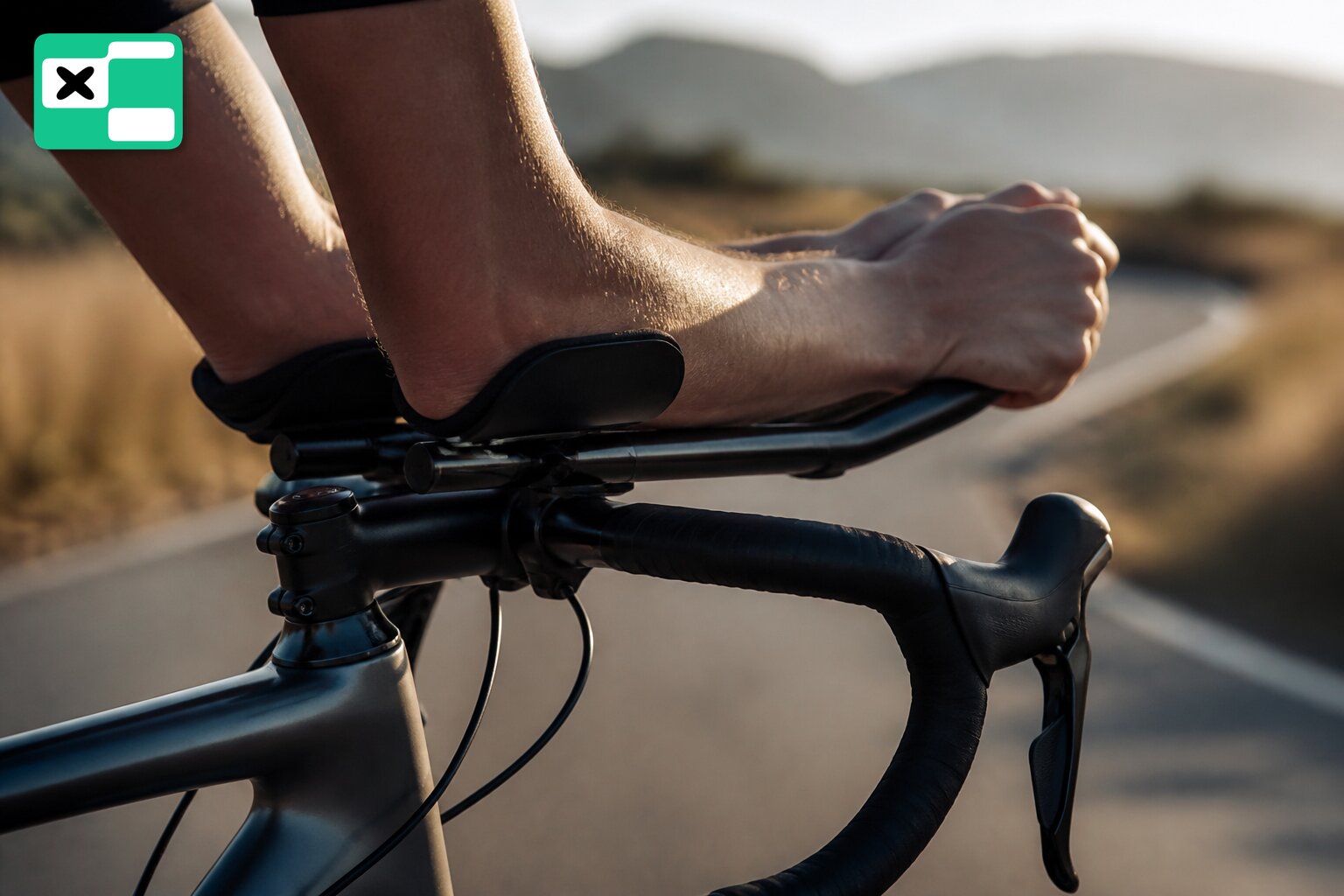
    A full time trial bike costs a fortune, and you have one road bike and a budget already spent on a wetsuit and a watch. The good news: clip-on aero bars get you into an aero position for under €50. They bolt onto a standard road handlebar and deliver what saves the most free watts on a bike, less frontal drag. Here is how to choose and set them up properly.

    Why triathletes use clip-ons

    On draft-legal distances, most amateur sprint ITU races, clip-on aero bars are banned. World Triathlon withdrew them from drafting races from the 2023 season for pack safety. Always check your own race’s rulebook. On long, non-drafting distances, IRONMAN, 70.3, most Challenge races, an aero position is the cheapest way to save energy. Tucking the torso and forearms cuts air resistance, which at 30 to 40 km/h eats most of your power. Clip-ons on a road bike are also a good testing ground: you try the position before spending thousands on a dedicated time trial bike.

    Three things to check when choosing

    Adjustability. This matters most. An aero position is not natural, so you need to fine-tune pad height, and the width and angle of the extensions. The more adjustment range, the easier it is to find a setup you can hold for hours, not minutes.

    Pad height and spacers. Once clip-ons go on a road bike, the knees can come too close to the chest at the top of the pedal stroke, and it gets cramped. Spacers under the pads open that space back up and save your breathing.

    Handlebar compatibility. A clip-on needs a flat section of bar roughly 2 to 3 cm wide on each side of the stem. Check whether your aero bar even has somewhere to clamp on, not every one does.

    Aluminium or carbon: where to start

    Aluminium is plenty to start with. At Decathlon, the aluminium Van Rysel triathlon clip-ons cost €44.99, a sensible first buy to test whether an aero position works for you. Carbon is a bigger outlay: carbon-fibre clip-ons start at a few hundred dollars or euro and dedicated, integrated aero systems can run into the thousands, worth it once you know what you want and race against the clock. Among proven adjustable clip-ons, the names that keep coming up are Profile Design, Vision (TriMax) and Zipp (Vuka Clip), differing mainly in adjustment range and price.

    Set them up before you ride

    Start the extension angle level or slightly upward, up to about 10 degrees, so the forearms rest and the shoulders relax. Do the first outings on a turbo trainer or an empty, straight road: an aero position shifts the bike’s centre of gravity and handling, especially under braking and in corners. Get comfortable steering before riding into traffic.

  • Garmin Edge 1060: The First AI Bike Computer, Maybe

    Garmin Edge 1060: The First AI Bike Computer, Maybe

    Garmin is preparing a successor to the Edge 1050, and for the first time the word “AI” is being used seriously in the context of a bike computer. The device has already cleared certification in several regulatory databases, so a launch is not a vague rumour but a matter of weeks. A lot of speculation has built up around the rumoured “Edge 1060” and its features, so it is worth separating the confirmed facts from the wish list.

    What is actually confirmed

    The one hard fact is a new Garmin device with the identifier A04831, which has appeared in regulatory databases: Malaysia’s SIRIM and the TDRA registry in the United Arab Emirates. The entries date from April 2026, and the Malaysian approval is valid until 2031, which points to a full product rather than a minor accessory. A regulatory filing is a standard step just before launch, since a manufacturer needs approval before hardware reaches shelves.

    That is where the hard facts end. Garmin has not officially confirmed the name “Edge 1060”, or any specification. Some outlets note that the A04831 designation could just as easily point to an Edge 1050 Solar variant rather than a completely new flagship. A SIRIM filing also cannot be independently verified without an industry account, and the most reliable signal, an FCC filing in the United States, has not appeared yet. Everything below this point is trade-press speculation, not a manufacturer statement.

    On timing, Garmin’s two-year cycle points to a window in June or July 2026. The Edge 1040 launched in June 2022, and the Edge 1050 launched on 25 June 2024, so the rhythm fits. That is deduction from a calendar, though, not an announced date.

    What “AI-native” would even mean

    Most of the noise centres on the claim that the new model will be the first “AI-native” bike computer, designed around artificial intelligence from the ground up rather than having features bolted on. In practice that would mean shifting some analysis from the cloud onto the device itself.

    The most commonly speculated features are:

    • Live adaptive power pacing: the computer would adjust target power mid-ride using wind data and current Body Battery level, instead of sticking to a fixed Power Guide plan.
    • PacePro for cycling: an extension of the running feature, suggesting effort distribution based on terrain, current fatigue and historical power zones.

    None of these features have been confirmed by Garmin. They are reasonable industry guesses, not an official roadmap.

    Screen and battery

    One correction worth making: the Edge 1050 does not have an AMOLED panel. It uses a bright, high-resolution LCD screen, 3.5 inches, 480 by 800 pixels, at around 1,000 nits. Its main weakness is battery life, up to 20 hours in normal mode, which looks poor next to the Edge 1040’s more than 35 hours. Better energy efficiency for long rides is the obvious direction for a successor, rather than a screen overhaul. No concrete battery or screen specifications exist yet for the new model.

    What it might cost

    Garmin typically holds flagship Edge pricing at a similar level between generations. The Edge 1050 launched at $699.99. It is reasonable to assume a successor lands in a similar range, though a new screen or AI features could push it slightly higher. There is no official launch price yet.

    Should a triathlete wait

    If you are riding an older Edge and considering an upgrade, it is worth holding off for a few weeks. A launch looks close. Even if the new model turns out too expensive, its debut usually pulls down prices on earlier versions. If the AI features do deliver sensible, wind-aware power pacing, that would be real value for long-distance racers. The final verdict will have to wait until the device is actually on a set of bars.

  • COROS Spring 2026: Hill Alerts and Pace Strategy

    COROS Spring 2026: Hill Alerts and Pace Strategy

    COROS has released a spring firmware update that adds 14 new features, including two that triathletes and trail runners have been waiting for. Hill Alerts (COROS’s answer to Garmin’s ClimbPro) and Pace Strategy (its answer to PacePro) arrive free on the current and previous generation of watches. That is the key difference: Garmin usually reserves new features for its newest models. COROS reaches back two generations.

    Hill Alerts: a preview of your climbs

    The feature works during running, trail running and hiking. It requires a route uploaded in advance from the COROS app.

    The watch alerts you at three points: at the start of a segment (length, elevation gain, average gradient), during the climb (remaining distance, remaining gain, current gradient), and at the end (confirmation that you’ve finished it). The Elevation Details view shows the full route profile with each segment’s difficulty colour-coded.

    COROS shows the current gradient in real time, not an average like Garmin. On variable terrain that’s a real advantage. The gradient shading along each segment is clear, comparable to what Hammerhead does on bike computers and, according to reviewers, better than Garmin’s on AMOLED screens.

    Limitations? The feature needs a loaded route: it doesn’t work standalone. You can’t adjust how sensitive climb detection is, which on rolling terrain can clutter the screen with alerts. And there’s no support for cycling. Hill Alerts won’t work on the bike.

    Pace Strategy: a pacing plan for race day

    Pace Strategy generates pacing plans matched to the terrain and your current fitness.

    On the road you pick a distance (5k up to a marathon, or any custom length), and the app generates a target time from your training data. You can set a pacing profile: positive split, negative split, or even. Individual segments can be edited manually, and the target time recalculates automatically.

    On the trail you load the route, and the system spreads pace across the elevation profile and your fitness. If the race is within three days, entering the start date makes the watch overlay a weather forecast onto each segment. You can also mark aid stations with a planned stop time.

    On the watch you see four data fields: target pace, projected finish time, time ahead or behind plan, and, on routes, distance to the next waypoint. After the activity, the watch compares the plan against reality segment by segment.

    The weak point? Route plans split into 1k, 5k or 10k intervals, not individual climbs. On a mountain ultra that’s a problem: a long segment can cover several ascents and descents, and an averaged pace over mixed terrain doesn’t give precise guidance.

    Hybrid Fitness mode: COROS moves into Hyrox

    The new mode tracks all 8 functional stations: SkiErg, Sled Push, Sled Pull, Burpee Broad Jumps, rowing, Farmer’s Carry, Sandbag Lunges and Wall Balls, matching the Hyrox race format exactly.

    There are three modes: Race (all 8 stations with running intervals, in Individual, Doubles or Relay format), Training (any configuration, with Continuous, Fixed or Manual pauses), and Test (a standardised benchmark: 1k run, 50 burpees, 100 lunges, 1k row, 30 push-ups, 100 wall balls).

    On the plus side, COROS pairs with Stryd in Hybrid Fitness mode, giving reliable pace data on the indoor running segments, where GPS struggles.

    On the downside, moving between stations takes 15 presses of the bottom-left button over a full Hyrox race. An accidental press of the crown pauses the activity, and unlike Garmin, there’s no way to undo it.

    Which watches get the update?

    FeaturePACE 4APEX 4NOMADPACE ProPACE 3APEX 2/2 ProVERTIX 2/2S
    Pace Strategy
    Hill Alerts
    Hybrid Fitness
    Nutrition Alerts

    Older models (PACE 2, APEX Pro, VERTIX 1) get only Race Predictor Trend. PIN codes and large-font notifications are, for now, limited to the NOMAD, APEX 4, PACE Pro and PACE 4, with the rest to follow.

    The rest of the update, in brief

    Nutrition Alerts now works in 5-minute increments, across a 5 to 60-minute range. Passcode is a 4-digit PIN that locks the watch once it’s been off your wrist for more than a minute. Sleep Mode syncs to your wake time and cuts screen interruptions. Race Predictor Trend tracks predicted times over time, not just a single reading.

    Verdict

    COROS is steadily closing the feature gap with Garmin, and doing it for free, across a wide range of models. Hill Alerts and Pace Strategy are concrete race-day tools that, a year ago, were exclusive to Garmin. No Hill Alerts support on the bike is a letdown for triathletes, but for running and trail, this is solid work.