Category: Triathlon

  • How to Start Triathlon Training: A Beginner’s Guide

    How to Start Triathlon Training: A Beginner’s Guide

    A triathlon combines swimming, cycling and running into one race. It tests your strength, endurance and determination. Don’t let that put you off: triathlon is open to anyone, regardless of starting fitness level, with the right training. This guide covers the basics of the sport, gear choices and training strategy to help you get started.

    What Is a Triathlon?

    A triathlon is a multi-discipline race that combines swimming, cycling and running. Distances range from sprint races to standard-distance events up to the full Ironman distance. Sprint distance is one of the shorter options: 750 metres of swimming, 20 km of cycling and a 5 km run. At the other end of the spectrum is the long-course distance: 3.86 km of swimming, 180.25 km of cycling and a marathon run of 42.195 km. There are plenty of distances in between. Beginners are generally advised to start with a shorter distance and build up gradually.

    Gear You Need to Get Started

    The basic gear you need for triathlon training is a swimsuit, a bike and running shoes.

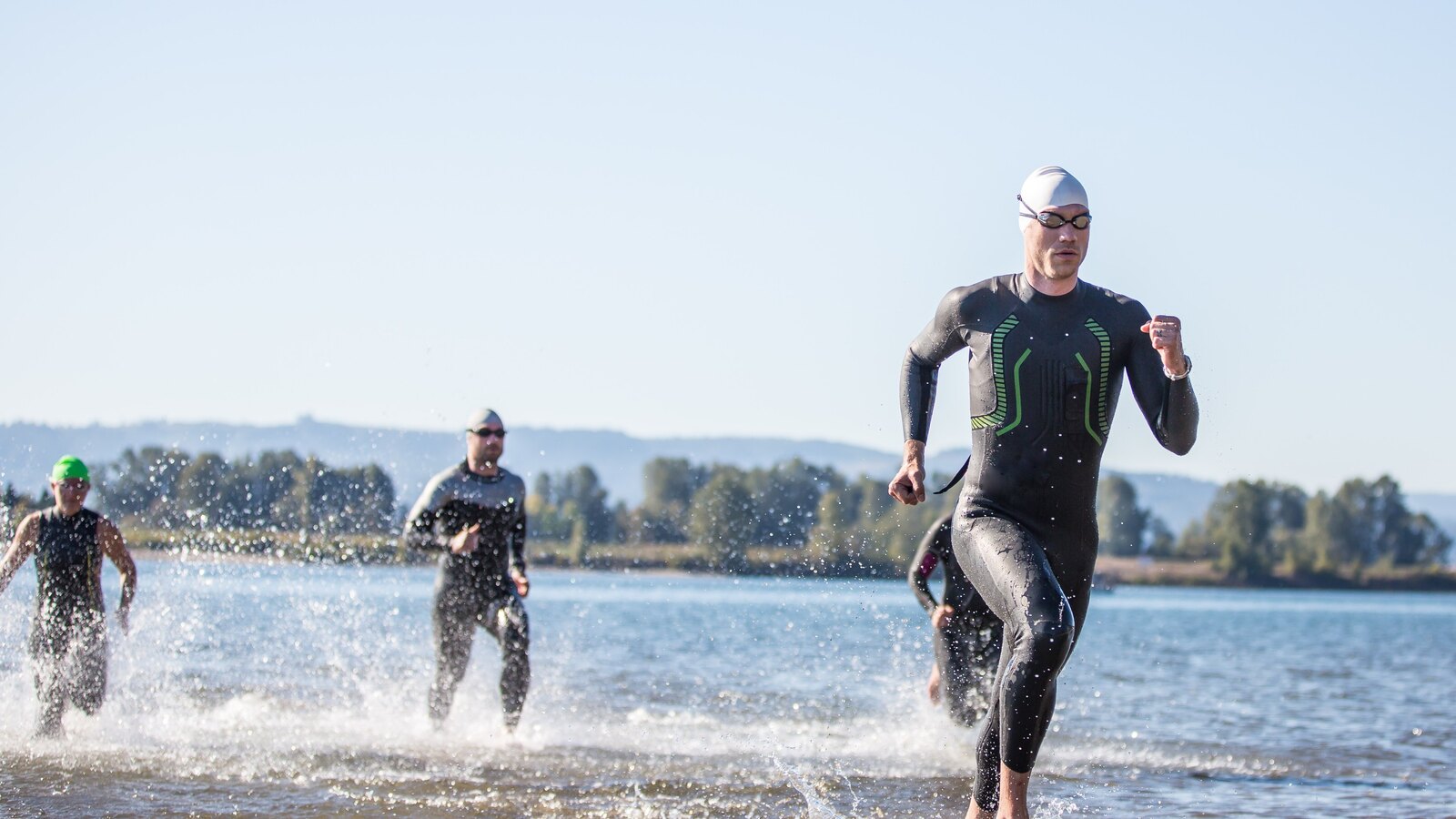
    Swimming is the first discipline in a triathlon, so a proper swimsuit matters. Choose one that’s comfortable and allows a full range of movement. Some races, particularly open water ones, may also require a wetsuit.

    The bike is the second piece of equipment. You can start with whatever bike you already own. If you plan to race, though, a dedicated triathlon bike, lighter and more aerodynamic, is worth the investment.

    Running shoes should be comfortable and properly fitted. Since you’ll be running after an intense swim and bike leg, good shoes make a real difference to comfort and performance.

    Beyond the essentials above, a bike helmet, sunglasses and a water bottle are worth having on race day. A sports watch is also useful for tracking progress and monitoring heart rate.

    Triathlon Training Basics

    The foundation of triathlon training is balancing work across swimming, cycling and running. Safety matters, and regular sessions let you build endurance and strength gradually. As Joe Friel writes in The Triathlete’s Training Bible, the key to triathlon success is deliberate training planning and a focus on technique in each discipline. He recommends increasing training intensity and volume gradually, to avoid injury and early burnout.

    Your training routine should include sessions in each of the three disciplines, plus strength work and stretching. Build in time for rest and recovery, and pay attention to nutrition. Triathlon calls for a holistic approach to training and health.

    Why a Training Plan Matters

    A structured training plan is central to triathlon success. It helps balance training across the three disciplines, ensures adequate recovery and makes it possible to track progress. Various training plans are available online, covering how to split sessions between swimming, cycling and running, and when and how long to rest. Fitting the plan to your own ability and goals matters more than following any plan to the letter.

    Nutrition and Hydration

    Diet and hydration matter as much as training itself. They fuel your sessions and support muscle recovery afterward. Triathletes need a balanced diet: protein for muscle repair, carbohydrates for energy, and fat for longer-lasting fuel. Hydration matters just as much, especially during long training sessions or races. Learning to fuel and hydrate properly is central to performing at your best.

    Recovery and Rest

    Rest and recovery are central to performing well in triathlon. Learning when and how to rest helps you avoid overtraining and injury. Recovery methods range from simple rest and sleep to physical therapies such as massage or ice treatment. Rest is often overlooked, but it matters as much as training itself.

    Motivation and Goals

    Staying motivated matters for long-term success in triathlon. Setting realistic goals and tracking progress helps with that. Whether the goal is finishing a first sprint-distance race or qualifying for an Ironman, every small step moves you closer to it.

    Triathlon demands determination, endurance and strength, but with the right training plan, anyone can take it on. Keep in mind the value of the right gear, balanced training, proper nutrition, recovery, and setting realistic goals.
  • Three-Rider Breakaway Wins the Americas Cup in Lima

    Three-Rider Breakaway Wins the Americas Cup in Lima

    Over the weekend of 21 to 22 August, Abtao beach in Callao, near Lima, hosted the Americas Triathlon Cup Callao Lima 2026. American athletes took two golds and a silver home from Peru. The most interesting part of this race is not the list of names, though, but what happened over the bike’s 20 km and why a three-rider breakaway held its lead to T2 anyway.

    Stuhlmacher: In Control From the First Metre

    Carter Stuhlmacher (USA) won the men’s race in a style every age-grouper should study frame by frame. He posted the fastest 750 m swim, in 9:41, and rolled into T1 with a 4-second cushion. Behind him came Joshua Bird (Canada) and Gabriel Terán Carvajal (Ecuador). No one else finished within 10 seconds of Terán.

    That trio rode alone. Behind them a large chase group formed and started closing, because in draft-legal triathlon, extra numbers mean free watts. The lead shrank across the full 20 km. It never disappeared, though. The breakaway riders reached T2 with a 30-second gap.

    Wilfong: The Fastest Run, Not Enough Distance

    Foster Wilfong (USA) came out of the water 58 seconds behind his fellow American. A disaster? Not necessarily, since it dropped him into the chase group, the only place from which the race was still winnable.

    On the run, Wilfong posted the fastest 5 km of the day, 14:20. It was the best run split in the whole field, and it still wasn’t enough. Stuhlmacher shed Bird and Terán, controlled the gap and brought home gold. Wilfong took silver, and Juan Jose Andrade Figueroa (Ecuador), just 8 seconds behind him, ran in for bronze.

    The lesson for an age-grouper is brutally simple: the best run of the day doesn’t make up a minute’s deficit from a 750 m swim if there’s no one left to catch on the way out. Swimming doesn’t win a sprint triathlon, but it decides which group you race in.

    Duncan Wins on the Bike, Not the Run

    In the women’s race, Faith Duncan (USA) confirmed her July win at Magog and beat a far more experienced Elizabeth Bravo (Ecuador). Gabby Martin (USA) and Leslie Amat Alvarez (Cuba) led out of the water, with Bravo close behind them.

    Duncan settled it on the bike. The best bike split of the day, 30:48, got her to the front and first into T2. She then added the fastest run, 15:53 over 5 km. Fastest in two of the three disciplines closes the case at a Continental Cup. Bravo took second and her first podium of the 2026 season after returning from injury, while Cecilia Sayuri Ramirez Alavez (Mexico) finished third.

    Juniors: McIntyre of Barbados Delivers

    In the junior race, Luke McIntyre (Barbados) posted the best swim and bike splits, and a 14:27 run, the second-fastest of the day including the seniors, gave him his first Junior Cup win, 14 seconds clear. Silver went to Maximiliano Bobadilla (Chile). Bronze went to Elias Medina Paolucci (Uruguay), who beat Sergio Maza Krause.

    Among the junior women, Manuela Ortega Arteaga (Ecuador) won by 32 seconds, settling it with a 16:37 run. Victoria Arce Nuñez (Costa Rica) was second, Renata Valentina Oña Paredes (Ecuador) third.

    The same weekend was meant to bring the Europe Junior Cup in Molėtai, Lithuania, but the super-sprint finals there were cancelled for weather.

  • Beaugrand and Hauser Sweep WTCS London’s Return

    Beaugrand and Hauser Sweep WTCS London’s Return

    After an eleven-year gap, the WTCS returned to London, and wasted no time reminding everyone why sprint racing can be triathlon’s most nerve-shredding format. On Saturday 25 July, Cassandre Beaugrand won for the third time in three starts this season. In the men’s race, Matt Hauser again proved stronger than Vasco Vilaça in the closing metres.

    Women: Beaugrand Settles It on the Run

    The last WTCS-ranked race in London was back in 2015. This time the course ran through the Royal Docks, with nearly half the run staged inside the ExCeL centre.

    Beaugrand came out of the water well off the front, a surprise for an Olympic champion. On the bike, American Taylor Knibb pushed hardest, and together with Britain’s Tilly Anema she opened a gap of roughly half a minute on the field.

    The breakaway ended at a single corner. Anema cut it too tight, hit a bollard and crashed. The chase group reeled Knibb back in bit by bit.

    The whole field hit the run together, and that’s when Beaugrand took over, dropping world champion Lisa Tertsch and rising star Tilda Månsson. The three women ran shoulder to shoulder almost to the line.

    Pos.AthleteCountryTime
    1Cassandre BeaugrandFRA56:06
    2Lisa TertschGER56:11 (+0:05)
    3Tilda MånssonSWE56:21 (+0:15)
    4Beth PotterGBR56:26 (+0:20)

    The top British finisher, Beth Potter, came in fourth. She still leads the overall series standings, even though Beaugrand has a perfect record of wins.

    The reason sits in the rulebook. The Frenchwoman has started only three of the six rounds held so far, and the standings count the best four results plus the Grand Final. Beaugrand hasn’t said whether she’ll chase the title for the rest of the season.

    Men: Three Seconds Between Hauser and Vilaça

    In the men’s race, Hauser confirmed his form, winning in 50:28, just 3 seconds ahead of Portugal’s Vasco Vilaça. Hungary’s Csongor Lehmann completed the podium, also within eight seconds of the win.

    It’s the Australian’s third win in three finished starts this season too, exactly the same record as Beaugrand’s.

    Pos.AthleteCountryTime
    1Matt HauserAUS50:28
    2Vasco VilaçaPOR50:31 (+0:03)
    3Csongor LehmannHUN50:36 (+0:08)
    4Morgan PearsonUSA50:45 (+0:17)

    Olympic champion Alex Yee struggled with the swim again. Off the bike, he was the most conspicuous absentee from the front group.

    On the run he clawed back what he could, cheered on loudly by his home crowd, but it was already too late for a high finish.

    What It Means for You

    A lead from the swim and bike guarantees nothing if you can’t hold the pace on the run. Beaugrand won despite a poor exit from the water.

    Crashes on short, technical bike loops are a real risk once the field gets dense. The day’s breakaway was decided by one badly cut corner, not a lack of power in anyone’s legs.

    In a race run over multiple laps, that one corner costs more than the watts you’re missing.

  • Philipp and Geens Headline the Pro Series Finale

    Philipp and Geens Headline the Pro Series Finale

    On Sunday 30 August, the IRONMAN Pro Series regular season closes. Zell am See-Kaprun is its 14th and final round. After that only two championship races remain, Nice and Kona. Up for grabs: 2500 points and a $50,000 prize purse.

    Philipp Wears Number One, Fifteen Days After a Course Record

    Laura Philipp will race with bib number 1. This is the same Philipp who demolished IRONMAN Kalmar on 15 August in 8:13:37. She took the course record that day from defending champion Katrine Christensen (8:27:49). Fifteen days between a full-distance race and a start in Austria isn’t textbook recovery. It’s the decision of someone with a specific score to settle.

    The German’s season hasn’t been easy. Health problems in spring cost her form. Even so, she collected third at 70.3 Pays d’Aix, a win at IRONMAN Sweden and second in Hamburg.

    There’s another twist. In Kalmar, Christensen finished second behind her, in 8:32:22, and that result put the Dane top of the Pro Series. Philipp, despite the course record, sits sixth. Zell am See is her chance to sharpen her half-distance form before the championship races. Triathlon Magazine Canada’s editors reckon she could climb as high as fourth after Sunday.

    Also on the start list is Lisa Perterer, runner-up at this race in 2025 and currently eleventh in the Pro Series.

    Geens Chases a Third Straight World Title

    The biggest name in the men’s field is Jelle Geens, a two-time 70.3 world champion. Injury wrecked his full-distance plans this year, so he’s put everything into one target: a third consecutive world title. No one has done that yet. Kona will have to wait until 2027.

    The Belgian’s numbers at this distance are obscene. Of 15 finished middle-distance races, counting T100 and 70.3 together, he’s stood on the podium in all but two. Two years ago, in one of his first starts at this distance, he finished second in Zell am See.

    One thing to note: Geens isn’t chasing the Pro Series this year, since he has no full-distance result to his name. In Austria he’s racing for form and rhythm, not points.

    Kraft vs Nygaard Priester, Rematch Number Seven

    Defending champion Fabian Kraft has had a mistake-free season, with podiums in all three races he’s finished: 70.3 Valencia, Challenge Walchsee and IRONMAN 70.3 Sweden.

    In Sweden, though, he lost to a fellow German. Lasse Nygaard Priester broke away from him on the run and won. A year earlier in Zell am See it went the other way, with Kraft running stronger. Both are on this start list, and their head-to-head record after six meetings favours Nygaard Priester.

    Trevor Foley arrives in Austria second in the Pro Series standings. He’s already banked a win at the 70.3 North American Championship in Happy Valley. Why another regular-season start? Probably as a backup result, in case Nice doesn’t go his way. He finished eighth in Kalmar, over twenty minutes behind the winner, so points from Austria could still come in useful.

    The financial motive isn’t a secret either. Foley has joked often enough on pro athlete panels about “$200G” that broadcasters now needle him about it. It refers to the bonus for the winner of the whole series, which in 2026 is exactly $200,000 for the top man and top woman. The top fifty split an additional $1.7 million.

    What It Means for You

    Coverage starts on Sunday 30 August at 10:30 CEST, on the IRONMAN YouTube channel. It’s one of the few windows in the calendar to see the complete 70.3 field racing together. Two weeks will remain until the world championship in Nice.

    Our pick for Sunday: Philipp wins the women’s race, but not as easily as her Kalmar result suggests. Fifteen days isn’t enough to be back at a hundred percent after a full-distance race. Among the men, we’re backing Geens. It’s his dress rehearsal before defending his title, and no one at this distance comes off the podium as rarely as him.

  • Räppo Erases a 2:20 Gap to Defend His Tallinn Title

    Räppo Erases a 2:20 Gap to Defend His Tallinn Title

    A year ago Henry Räppo won in Tallinn in a finish decided by seconds. On Sunday 23 August he defended his title far more comfortably, with a lead of over a minute. “Comfortably” is the wrong word, though, for a race in which he came out of T2 two and a half minutes down.

    Butters Dominated the First Two Legs

    German Hannes Butters swam fastest and came out of the water more than a minute ahead of the group holding Räppo, Marco Lorenzon, Enzo Bourdon and Casimir Moine.

    The Estonian is known for a strong bike leg, so he tried to prove it from the first kilometres. It didn’t work. Butters held pace well enough that he had over 2:20 in hand over Räppo by T2. Louis Woodgate came off the bike third, 2:45 down.

    At that point the race looked decided. At 70.3 distance, a two-and-a-half-minute lead out of the second transition is usually a verdict.

    The Run: A Minute Back in Four Kilometres

    Räppo didn’t calculate, though. In the first four kilometres he clawed back more than a minute. By the eighth he was already alongside Butters.

    They ran together only briefly. Räppo pulled away immediately and took the win in 3:38:31. Butters finished second in 3:39:38, 1:07 behind. Frenchman Enzo Bourdon came in third in 3:41:12.

    For the Estonian, it’s his second strong result of the season on northern European courses: in July he won Challenge Turku.

    Bernardi in Control, Kapten Three Seconds From the Podium

    In the women’s race, Italy’s Marta Bernardi won in 4:12:04. Behind her, France’s Sandra Huon finished in 4:13:05, a minute back.

    The real drama was for third place, though. Local athlete Liis Kapten closed out the podium in 4:13:08, losing to Huon by three seconds. The Estonian crowd got two storylines from one race: their winner, and their own athlete fighting to the line for second.

    Bernardi has raced evenly all year, and in Tallinn she never gave up the lead once she was off the bike.

    Results

    PlaceMenTimeWomenTime
    1Henry Räppo (EST)3:38:31Marta Bernardi (ITA)4:12:04
    2Hannes Butters (GER)3:39:38Sandra Huon (FRA)4:13:05
    3Enzo Bourdon (FRA)3:41:12Liis Kapten (EST)4:13:08

    What This Means for an Age-Grouper

    Tallinn is one of the closer 70.3 starts for anyone travelling from northern or central Europe. It sits on the Gulf of Finland, reachable by plane or ferry, so it’s worth a spot on the list for anyone looking for a half-distance race away from the crowded courses in Germany and Austria.

    There’s also a purely tactical lesson here, independent of ability level. Butters won the swim, won the bike, and still lost the race. Räppo rode in a way that let him get off the bike with legs that could run. That’s not exactly a discovery at 70.3 distance, but it’s rarely visible on this scale: 2:20 of deficit closed in under eight kilometres.

    Anyone who has ever blown up on the bike and then walked a half marathon home knows exactly what that means.

  • FISU Nyon 2026: Peszleg, Bettin Take World Titles

    FISU Nyon 2026: Peszleg, Bettin Take World Titles

    The World University Triathlon Championships took place in Nyon, on Lake Geneva, over the weekend of 8 and 9 August. Dominika Peszleg won the women’s race by one second, and Benedikt Bettin capped the best season of his career.

    Bettin runs away from the field on the run

    The race was over sprint distance: 750m swim, 21km bike and 5km run.

    Bettin won in 55:11, finishing 12 seconds ahead of German runner-up Jan Scheffold. Hungarian Gergő Dobi completed the podium.

    This was no one-day fluke for Bettin. Every one of his international gold medals came this season: the Africa Cup, the Asia Cup, and now Nyon. He also placed fourth at the sprint European Championships.

    His rise up the world ranking opens a path to a first WTCS start, a series he has not yet raced.

    Peszleg wins by a second, bronze two seconds off gold

    In the women’s race, Peszleg won in 1:01:57. Frenchwoman Elena Polaert led out of transition first, but the Hungarian caught her over the closing stretch.

    It came down to the fastest run in the field, 17:00 for 5km. Peszleg won by one second in the end.

    Another Frenchwoman, Appoline Foltz, took bronze a second behind Polaert. Gold to bronze came down to two seconds, on a distance that takes just over an hour.

    Peszleg is aiming higher than a university podium. In a stacked Hungarian squad she is fighting for an Olympic spot, and Nyon was just one stop in her season.

    Why this matters for amateurs

    FISU Nyon will not turn up in a prime-time broadcast slot. But the opening of the qualification window for Los Angeles 2028 means every international start, even a student one, now carries more weight than it did a year ago.

    Athletes such as Bettin and Peszleg are not there just to take part. They are racing for ranking points that will decide, two years from now, who goes to Los Angeles.

    Bettin is building a season without an international defeat and climbing the rankings without a single WTCS start, a rare trajectory. When Olympic spots start to be decided in 2027, some of these names will already be well known.

  • Maja Stage Nielsen Retires From Triathlon

    Maja Stage Nielsen Retires From Triathlon

    Maja Stage Nielsen, the Danish athlete who has raced professionally for more than a decade, has announced her retirement from triathlon. The 38-year-old said on Instagram that she no longer has “race mode” in her, even though she still loves training. She no longer wants to line up just to be on the start list.

    Over a decade on the IRONMAN distance

    Nielsen built her career on the long distance, where the racing is hardest. Her record includes a win at Apfelland Triathlon in 2023 and a string of second-place finishes at some of the biggest IRONMAN races.

    • Mallorca, 2016
    • Lanzarote and Cozumel, 2019
    • Texas, 2023
    • Hamburg, 2024

    These are the course names that most amateurs treat as a lifetime goal. She raced them professionally, year after year.

    This is it. Time to admit that I’m done racing triathlon. I’ve known for a while. Many of you probably suspected it too. I just didn’t have the courage to say it out loud.

    Maja Stage Nielsen

    Thirteen starts without a podium, despite good form

    Her last podium finish was second place at IRONMAN 70.3 Westfriesland the previous season. After that came thirteen consecutive starts without a top-three result. She opened the 2026 season with a DNF at IRONMAN New Zealand, pulling out on the bike leg.

    Her fitness had not left her, though. In May, after that DNF, she ran the Copenhagen Marathon, finishing 17th among women in 2:44:04.

    Sport is as hard as it is rewarding. Being an athlete is the only thing I’ve known. It challenged me, shaped me and gave me more than I ever dreamed of. I learned to love swimming, I love riding my bike, I love running and I still love doing it every day, except on race day. I don’t have any “race mode” left in me, and I’m done being the athlete who shows up to the start line just to be there. I’ve done that too many times already. It was never the real me, and I don’t want it to keep being me.

    Maja Stage Nielsen

    What comes next, without a plan yet

    Nielsen admits she has no plan yet for the next stage, even though she made the decision long ago. The new chapter unsettles her more than any professional start did, despite more than a decade of lining up at the gun.

    I always loved the process more than the result. Training, the daily routine, small improvements, that’s what gave me joy.

    Maja Stage Nielsen

    I have no idea what comes next. I only know I still have dreams and goals to chase. I know sport will always be part of my life. I know I need to find a job, and I know it’s time to get moving. This isn’t goodbye to sport. This isn’t goodbye to you. It’s only goodbye to racing triathlon professionally.

    Maja Stage Nielsen
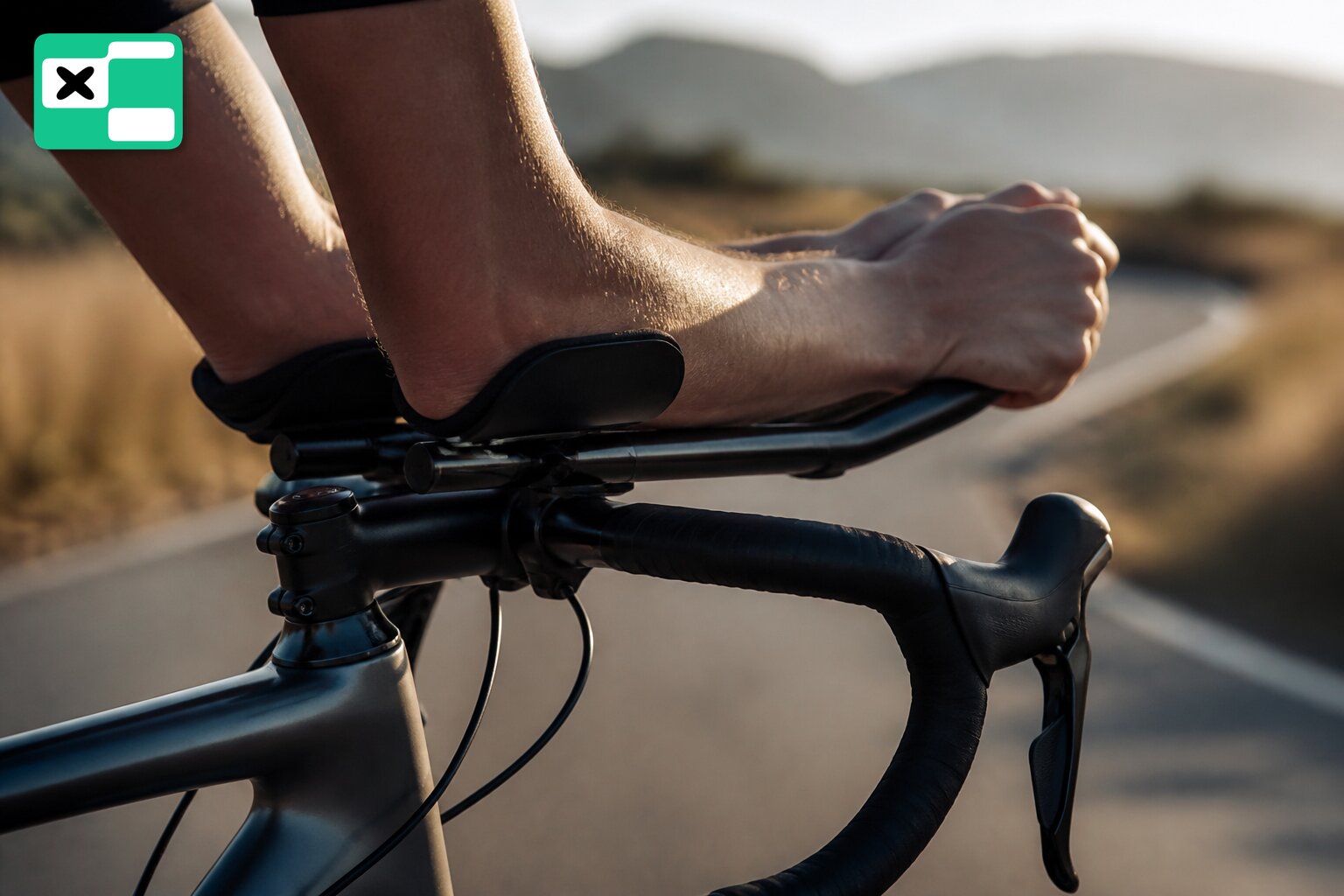
  • Clip-On Aero Bars: Get Aero Without a TT Bike

    Clip-On Aero Bars: Get Aero Without a TT Bike

    A full time trial bike costs a fortune, and you have one road bike and a budget already spent on a wetsuit and a watch. The good news: clip-on aero bars get you into an aero position for under €50. They bolt onto a standard road handlebar and deliver what saves the most free watts on a bike, less frontal drag. Here is how to choose and set them up properly.

    Why triathletes use clip-ons

    On draft-legal distances, most amateur sprint ITU races, clip-on aero bars are banned. World Triathlon withdrew them from drafting races from the 2023 season for pack safety. Always check your own race’s rulebook. On long, non-drafting distances, IRONMAN, 70.3, most Challenge races, an aero position is the cheapest way to save energy. Tucking the torso and forearms cuts air resistance, which at 30 to 40 km/h eats most of your power. Clip-ons on a road bike are also a good testing ground: you try the position before spending thousands on a dedicated time trial bike.

    Three things to check when choosing

    Adjustability. This matters most. An aero position is not natural, so you need to fine-tune pad height, and the width and angle of the extensions. The more adjustment range, the easier it is to find a setup you can hold for hours, not minutes.

    Pad height and spacers. Once clip-ons go on a road bike, the knees can come too close to the chest at the top of the pedal stroke, and it gets cramped. Spacers under the pads open that space back up and save your breathing.

    Handlebar compatibility. A clip-on needs a flat section of bar roughly 2 to 3 cm wide on each side of the stem. Check whether your aero bar even has somewhere to clamp on, not every one does.

    Aluminium or carbon: where to start

    Aluminium is plenty to start with. At Decathlon, the aluminium Van Rysel triathlon clip-ons cost €44.99, a sensible first buy to test whether an aero position works for you. Carbon is a bigger outlay: carbon-fibre clip-ons start at a few hundred dollars or euro and dedicated, integrated aero systems can run into the thousands, worth it once you know what you want and race against the clock. Among proven adjustable clip-ons, the names that keep coming up are Profile Design, Vision (TriMax) and Zipp (Vuka Clip), differing mainly in adjustment range and price.

    Set them up before you ride

    Start the extension angle level or slightly upward, up to about 10 degrees, so the forearms rest and the shoulders relax. Do the first outings on a turbo trainer or an empty, straight road: an aero position shifts the bike’s centre of gravity and handling, especially under braking and in corners. Get comfortable steering before riding into traffic.

  • Run-Walk Pacing for an IRONMAN Marathon

    Run-Walk Pacing for an IRONMAN Marathon

    By the time you start the marathon in a full-distance IRONMAN, you’ve already been racing for hours. The leaders have around 5 to 6 hours behind them, slower athletes even 9 to 10. You’re tired, your energy is low, and 42 km are still ahead of you. Trying to just run the whole thing on feel usually ends in walking through the second half anyway, the forced, unplanned kind. The run-walk strategy flips that logic: you walk before you have to, and end up running faster overall.

    Why planned walking works

    It sounds paradoxical, but the mechanics behind it are straightforward. Triathletes who work short walking breaks into the run from the start tend to finish the marathon with a better overall time. The reason is simple: they don’t fall apart around the 30 km mark and don’t end up in a long, uncontrolled walk to the finish. A short walking break isn’t rest, it’s active recovery that protects the muscles’ ability to keep running over the following kilometres.

    Researchers describe a similar effect in ultrarunners. A study published in PLoS One looked at runners in the extreme Tor des Géants race, around 330 km (205 miles) with about 24,000 m of elevation gain, and compared them with participants in much shorter ultra races. The finding: athletes in the longest race had lower markers of muscle damage and inflammation, despite covering a far greater distance. The authors put this down to a protective, anticipatory pacing strategy, a slow and controlled pace from the very start. A body that knows a long road is coming holds itself back.

    Run-walk is the same strategy, built rigidly into the plan. Instead of waiting for the body to force a walk, you impose one deliberately, while you’re still fully in control.

    How to build your own pattern

    The pattern depends on your level and time goal. A proven approach is a walking break at every aid station, which on an IRONMAN course are usually spaced about every 1.5 to 2 km. These are natural anchor points: you slow down, take a gel and water, swallow calmly, and move on.

    Two rules keep this under control:

    • Breaks are short and consistent. Ten to a few dozen seconds of walking, not a stroll. The point is to reset heart rate and get calories down, not to fully rest.
    • Practise before race day. Trying run-walk for the first time on race day is a risk. Work it into long runs and brick sessions so the body learns and accepts the rhythm.

    Pace: three indicators, not one

    Run pace in an IRONMAN is decided earlier, on the bike and in your fuelling. Ride too hard and there’s nothing left for the marathon. A smart bike leg and getting carbohydrate intake right give you a shot at a good run.

    On the marathon itself, you can’t rely on a single number. Wind, climbs and heart rate drift from overheating throw off any one indicator on its own. Combine three: RPE, heart rate and pace. Hold the first half at the bottom end of your range. If you feel fresh at halfway, you can pick it up slightly. Most of the time you won’t even need to.

    The key rule: the risk of starting too fast is far bigger than the risk of starting too slow. A pace that’s too slow can be made up in the second half. Blow up at the start and there’s nothing left to make up.

    Base it on reality

    The last point is to base your target pace on real results from the last 8 weeks, not on ambition or last season’s form. A run-walk plan built on inflated assumptions falls apart just as fast as any other feel-based pacing strategy.

  • Low Ferritin Is Quietly Stealing Your Watts

    Low Ferritin Is Quietly Stealing Your Watts

    You’re training as usual, sleeping reasonably well, and your legs are still heavy, your heart rate takes longer to climb in training, and your form has stalled. Before blaming the plan, check something that doesn’t hurt and gives no clear symptoms until it’s already bad: your iron level, specifically ferritin.

    Ferritin: the store that runs out first

    Iron fuels oxygen transport. Without it, haemoglobin can’t carry oxygen from the lungs to the muscles, and mitochondria can’t turn it into energy. The problem is that the body empties its store first, and ferritin is the measure of that store.

    That’s where the trap sits. The standard lab range treats ferritin of 12 ng/ml as normal. That threshold was set for the general population and misses the deficiency that actually limits performance. For women in endurance sport, 35 to 40 ng/ml is usually treated as the minimum for good form, and a range of 50 to 70 ng/ml is sometimes recommended for good recovery, energy and injury protection. So you can have a result that’s technically normal and still be running on fumes.

    The most dangerous version is so-called iron deficiency without anaemia. Haemoglobin still looks fine, so a GP says everything’s normal, while ferritin is already on the floor and quietly suppressing performance. A systematic review covering 669 female athletes found that iron deficiency lowered endurance capacity by 3 to 4% compared with athletes at normal levels. Over the finish line of a 70.3, that handful of percentage points is worth ten-plus minutes.

    Why triathletes lose iron faster

    This isn’t about poor diet. The sport itself increases losses, through several mechanisms:

    • Footstrike haemolysis. Every running stride causes micro-damage to red blood cells in the foot. The more you run on hard surfaces, the bigger the losses.
    • Sweat. You lose iron through sweat, and triathletes sweat a lot and often.
    • Small gastrointestinal bleeds during long, intense efforts.
    • Menstruation. For women, it’s one of the main reasons deficiency is far more common.
    • Hepcidin. A hormone that rises after intense exercise and blocks iron absorption in the gut exactly when you need it most.

    Iron deficiency affects roughly 15 to 35% of female athletes and 3 to 11% of male athletes. Among competitive runners and triathletes, an estimated 55 to 60% of women and 31 to 37% of men go through at least one deficiency episode during their career. In one study of recreational female runners, nearly three-quarters had ferritin below 15 ng/ml despite showing no signs of anaemia.

    Don’t guess, test

    The most important rule: don’t supplement iron blind. Excess iron is harmful, and the body has no efficient way to get rid of the surplus. Instead of guessing, get a blood test that includes ferritin, ideally alongside a full blood count and transferrin saturation. That helps separate a genuine deficiency from a temporary dip after a heavy training block, because ferritin also behaves as an inflammation marker and can read high right after a hard effort.

    Leave interpretation and any supplementation decision to a doctor or sports dietitian. This article is background knowledge, not medical advice. Dose and form of any supplement should be decided individually.

    How to supplement iron sensibly

    If a deficiency is confirmed, research in recent years has changed the approach to dosing:

    • Less is more. Lower doses, in the range of 40 to 80 mg of iron, maximise the percentage actually absorbed. Splitting the dose into two a day doesn’t help, it just raises hepcidin.
    • Every other day instead of daily. After a dose of iron, hepcidin stays elevated for about 24 hours, blocking further absorption. Dosing every other day improves iron uptake and causes fewer stomach side effects. Ferritin rises at a similar rate over 8 weeks on both daily and alternate-day schedules, but the alternate-day one is gentler on the gut.
    • Vitamin C helps. Taking iron on an empty stomach with vitamin C increases absorption by around 65%.
    • Keep it away from coffee, tea and calcium. Coffee can cut iron absorption by as much as 39%, tea by up to 64%, and calcium by up to 50%. Leave a gap of at least 2 hours.

    The practical takeaway: a single moderate dose every other day, on an empty stomach, with vitamin C, away from morning coffee, works far better than swallowing a large dose daily and washing it down with a latte.

    Summary

    Iron is one of the few markers where a single blood test can explain weeks of unexplained fatigue. If your form has stalled for no clear reason and you run a lot or menstruate, check ferritin before prescribing yourself another hard block. The best training plan is worthless if your blood has nothing to carry oxygen with.